
Sell USDT for UAH: payout to PrivatBank, Monobank, PUMB, Oschadbank
How to sell USDT for hryvnia: from request to money on your card
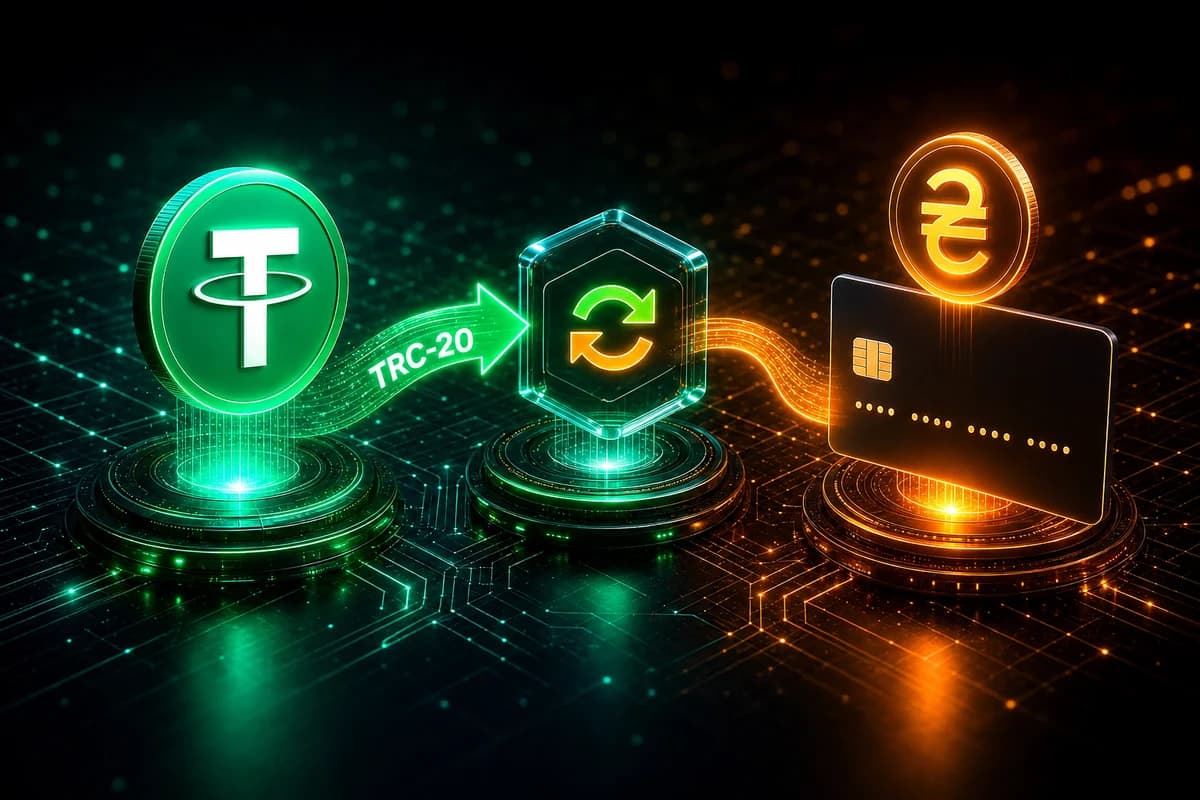
There are several ways to sell USDT for hryvnia today, but for most people in Ukraine the task looks the same: there is a stablecoin in a wallet, and it needs to become money on a bank card – quickly, at a clear rate and without the risk of the bank freezing the account after the payout arrives. To choose the right route, it helps to understand first what steps the deal consists of and where delays or losses can happen along the way.
Step one – choosing the direction and calculating the amount. The user enters how much USDT they want to sell and which bank card should receive the hryvnia. At this point the exchanger's calculator already shows the rate and the final amount to be received, so the decision is made with a specific figure in front of you rather than blindly. This is the main convenience of a service: the final amount is known before the request is even created.
Step two – payout details and creating the request. The client enters the card number that should receive the money and creates a request from their personal account. Right after that, the request details show the wallet address for sending USDT and the transfer network. For hryvnia payouts Coinmoneyhub uses USDT on the TRC-20 network – the most widespread and affordable network for the stablecoin, supported by almost every wallet and exchange service.
Step three – sending the cryptocurrency and confirming the transaction on the blockchain. The transfer has to receive confirmations on the Tron network, after which the request moves into processing. Normally this takes a few minutes, but when the network is congested it can take a little longer – and that depends neither on the client nor on the service.
Step four – the hryvnia payout to the card. As soon as the USDT is credited, the service sends the payout to the details provided, and the request status is updated in the personal account. The expected payout time for each request is shown in its details, so the client does not have to guess when the money will arrive.
"At what rate can I sell USDT" is one of the most common questions, and the answer depends on when the rate is fixed. Coinmoneyhub runs the exchange at the current rate at the moment the funds arrive, and the up-to-date figures for every direction can always be checked on the exchange rates page. This rules out the situation where a client receives less than promised with the explanation "the rate changed while you were sending".
What ways to sell USDT exist and how they differ
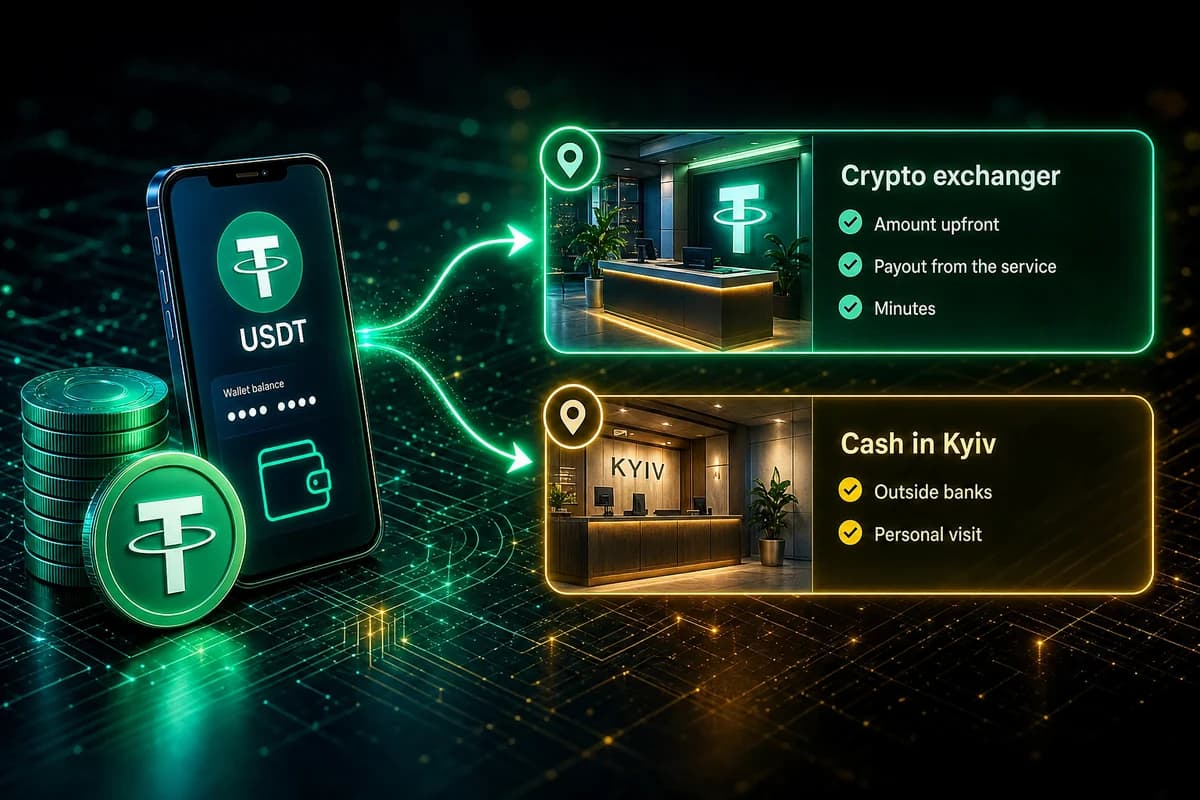
The way you sell USDT is not a formality – it directly affects the speed, the final amount and the level of risk. In practice, two main scenarios have developed in Ukraine, and each has its own logic depending on the amount, the urgency and the user's experience.
Selling through a crypto exchanger. The user sends USDT to the service and receives hryvnia on the card from the service itself. The rate and the amount are known in advance, and responsibility for completing the deal lies with the exchanger. This is the format people look for when they search "exchange USDT for hryvnia" or "USDT to UAH exchanger": it combines speed with a predictable result.
Exchange for cash. For those who need to receive money outside the banking system, there is the option of exchanging USDT for cash hryvnia – on Coinmoneyhub this is available in Kyiv. This option requires agreeing on details and a personal visit, so it is slower than a card payout, but it is justified in certain situations.
Which Ukrainian bank cards can receive USDT payouts through Coinmoneyhub
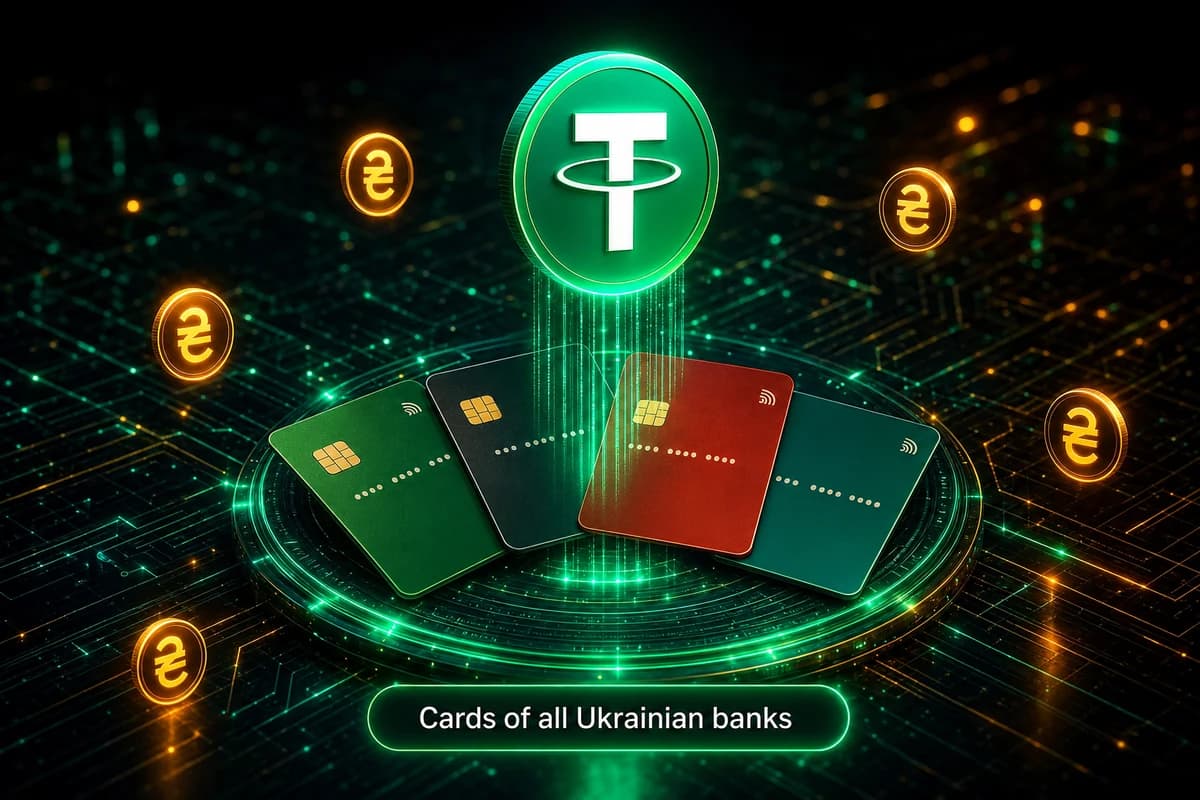
Most often people search not for an abstract "USDT withdrawal" but for a specific bank: "USDT to Privat24", "sell USDT to Monobank", "withdraw USDT to a PUMB card". That makes sense – each bank has its own limits, crediting speed and attitude towards cryptocurrency-related operations. That is why Coinmoneyhub has a separate direction for each bank with its own rate and limits.
PrivatBank clients can use the sell USDT to a Privat24 card direction – the most popular option, given how many of this bank's cards Ukrainians hold. Monobank card holders can sell USDT to Monobank, while PUMB and Oschadbank clients can use the USDT to PUMB and USDT to Oschadbank directions.
If your bank is not among the separate directions, that is not a problem: hryvnia payouts are available to cards of all Ukrainian banks. Simply enter your card number when creating the request – the calculator will show the amount to be received right away in the same way.
When choosing a direction, it makes sense to look not only at the rate but also at where it will be more convenient to spend the money afterwards. If your main card is Monobank, there is no point withdrawing to Privat24 for a minimal difference in the rate and then paying a fee to move money between banks.
How to sell USDT on Coinmoneyhub: step-by-step guide
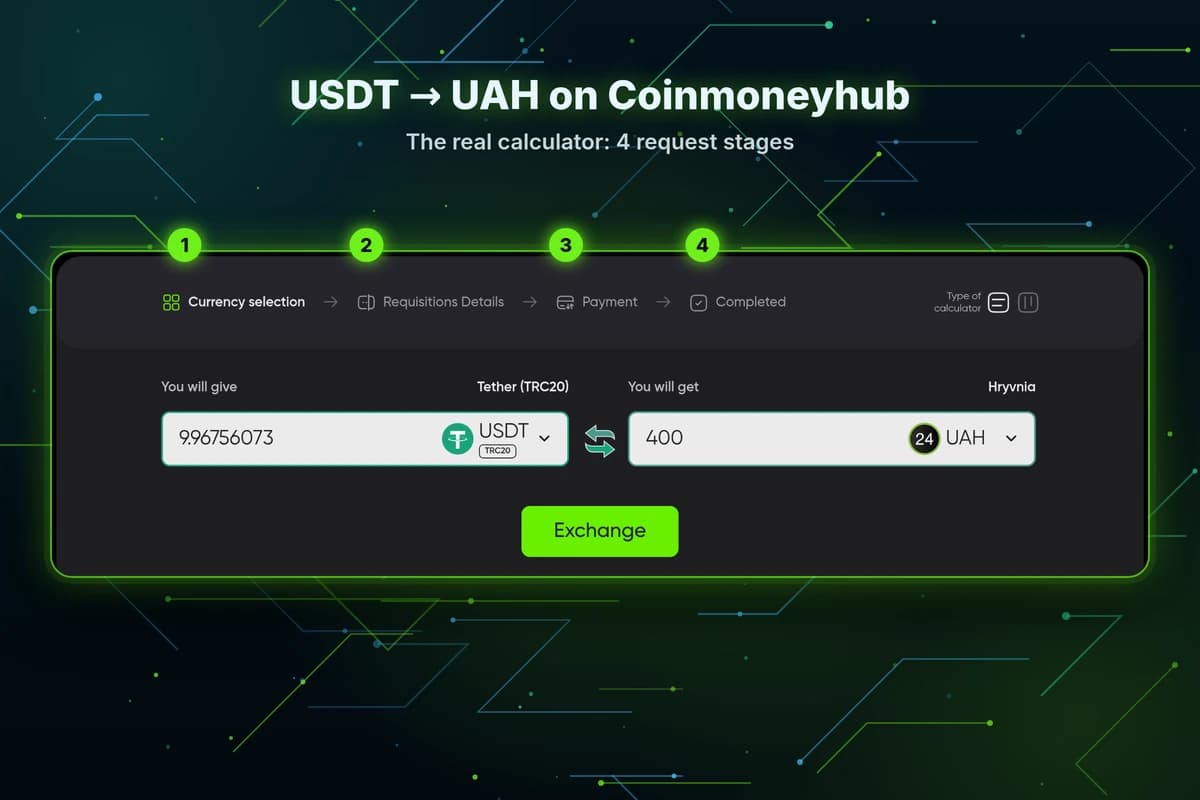
The whole exchange fits into four simple steps and takes a few minutes, and most of that time is spent not on filling in the form but on confirming the transaction on the network. Below is what happens at each step and what to pay attention to.
Step 1. Create an exchange request. Log in to your personal account on Coinmoneyhub or sign up if you do not have an account yet: this way you always see the status of every operation and your exchange history. In the calculator, choose the direction – USDT TRC-20 in the "You send" field and hryvnia to the card of the bank you need in the "You receive" field – then enter the amount and the card number for the payout. The calculator immediately shows the amount to be received including all fees, and if the amount is outside the direction's limits, it will tell you. Check the entered details once more before creating the request.
Step 2. Get the payment details. Once the request is created, the wallet address for the USDT transfer and the network automatically appear in its details. There is nothing to request from support: after payment, all the following stages run automatically.
Step 3. Send USDT. Open the request details, copy the address, paste it into the send field in your wallet, select the TRC-20 network and send the amount from the request. Check the address, network and amount before sending. As soon as the USDT reaches the service's address, the exchange rate is fixed, and further processing of the request runs automatically.
Step 4. Receive hryvnia. After the request is processed, the money is automatically sent to the card specified when it was created. The status is updated in your personal account, and the estimated payout time is shown in the request details.
What the amount you receive consists of: the rate and the network fee
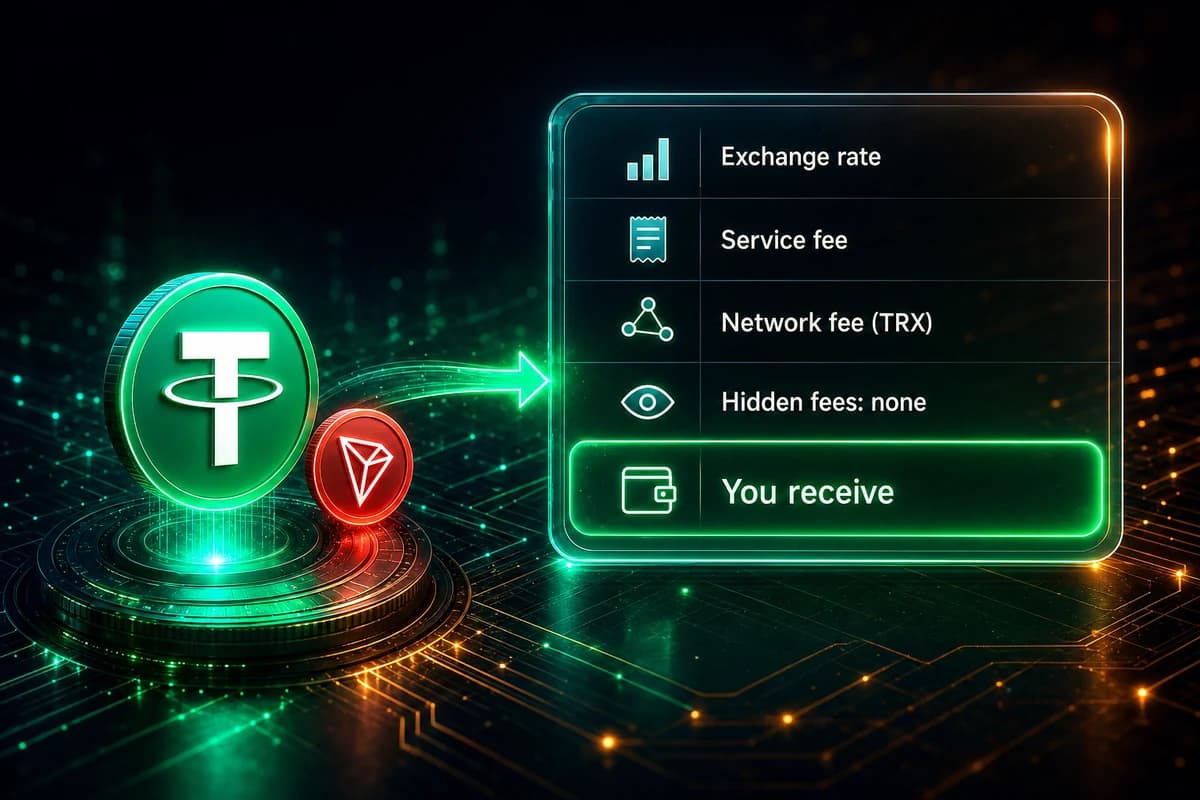
The final amount in hryvnia that the client sees in the calculator is made up of several components, and it is worth understanding them at least in order to compare offers from different services correctly. What you need to compare is the amount to be received, not the "headline rate", because a rate without fees says almost nothing about the real benefit.
Exchange rate and fee. The calculator shows the rate and the service fee right away – before the request is even created. No hidden fees and no floating rates: the amount you see in the calculator is the amount that will arrive on the card.
Network fee. To send USDT on the TRC-20 network from your own wallet, it needs to hold a little TRX – the native coin of the Tron network, which pays for the transaction. If there is no TRX in the wallet, the transfer simply will not go through. If USDT is sent from another service, that service charges the withdrawal fee, and it is important to keep in mind that exactly the amount stated in the request should reach the address from the request. If the fee is deducted from the transfer amount, you need to send a little extra. More on how the two differ in a separate article – how cryptocurrency wallets work.
Risks when selling USDT and how to reduce them
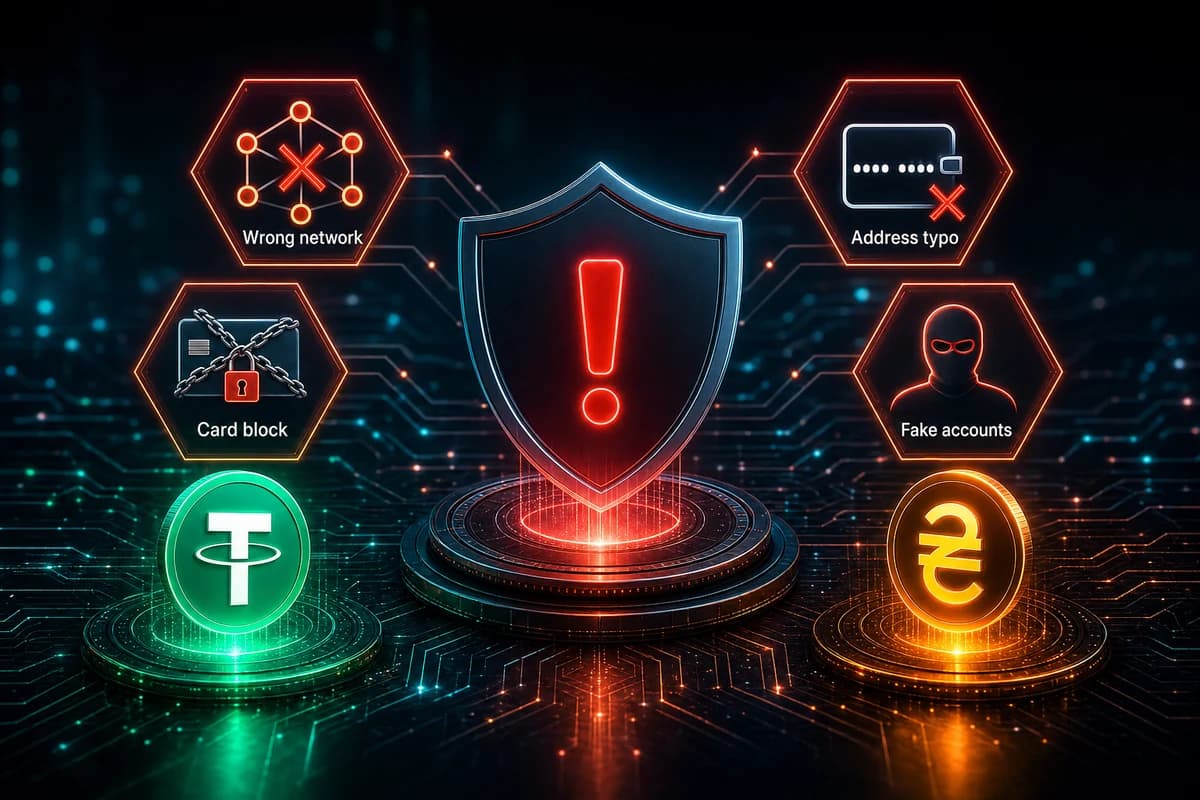
Most problems when selling USDT for hryvnia arise not because of the service but because of small mistakes on the user's side – the wrong network, a typo in the details or haste. Almost all of these risks can be ruled out if you know about them in advance.
Wrong transfer network. USDT exists on several networks – TRC-20, ERC-20, BEP-20 and others – and their addresses are not interchangeable. If you send USDT on the ERC-20 network to an address meant for TRC-20, the transfer will not reach the recipient, and such funds can no longer be recovered. That is why, before sending, it is worth checking twice that the wallet or sending service has exactly the network stated in the request selected.
Mistake in the address or details. Blockchain transactions are irreversible, so the wallet address should only be copied from the request, never typed by hand. The same applies to the card number: payout details cannot be corrected after the payout has been sent. Five seconds of checking before confirming the request save hours of correspondence with support and the bank.
Card block by the bank. Banks closely monitor incoming payments related to cryptocurrency, especially when the money comes from different private individuals. A payout from a service reduces this risk, but it is recommended to withdraw funds only to your own card, not to split the amount into dozens of small transfers and not to carry out many operations within a day or two – it is better to spread them out over time. For operations that get flagged for review, it helps to understand how AML verification during a cryptocurrency exchange works and which documents may be needed.
Scammers posing as the service. A separate category of risk is fake messenger accounts that copy the exchanger's name and logo and offer a "better rate" outside the website. Every deal on Coinmoneyhub is carried out only through the personal account on the website, and the official communication channels are listed on the contacts page. If someone offers to transfer USDT directly to their own wallet, bypassing the request, that is a reason to end the conversation.
What to do if something goes wrong
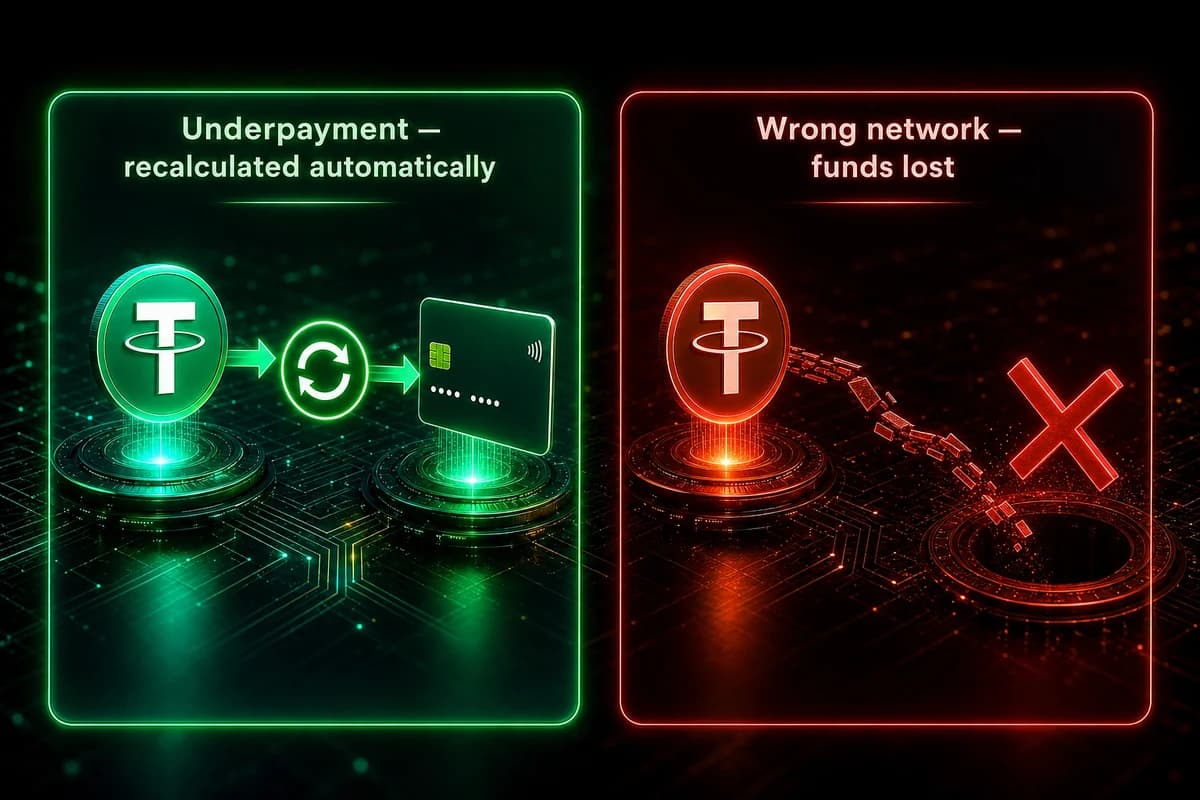
Even with careful preparation, non-standard situations sometimes arise. Most of them require no action from the client, and the rest are easiest to prevent in advance.
Less was sent than stated in the request. This happens when the sending service or wallet deducts its withdrawal fee from the transfer amount itself, and it is a normal situation. There is no need to worry: the payout amount is automatically recalculated based on the USDT actually received, and the hryvnia will arrive on the card without any further requests.
USDT was sent on the wrong network. A transfer made on a different network cannot be received by the service, and unfortunately such funds can no longer be recovered. That is why the only reliable protection is to send USDT only to the address from the request and only on the network stated in it. If the network is chosen correctly, the service will take care of everything else.
How to choose a service for selling USDT: what to look at
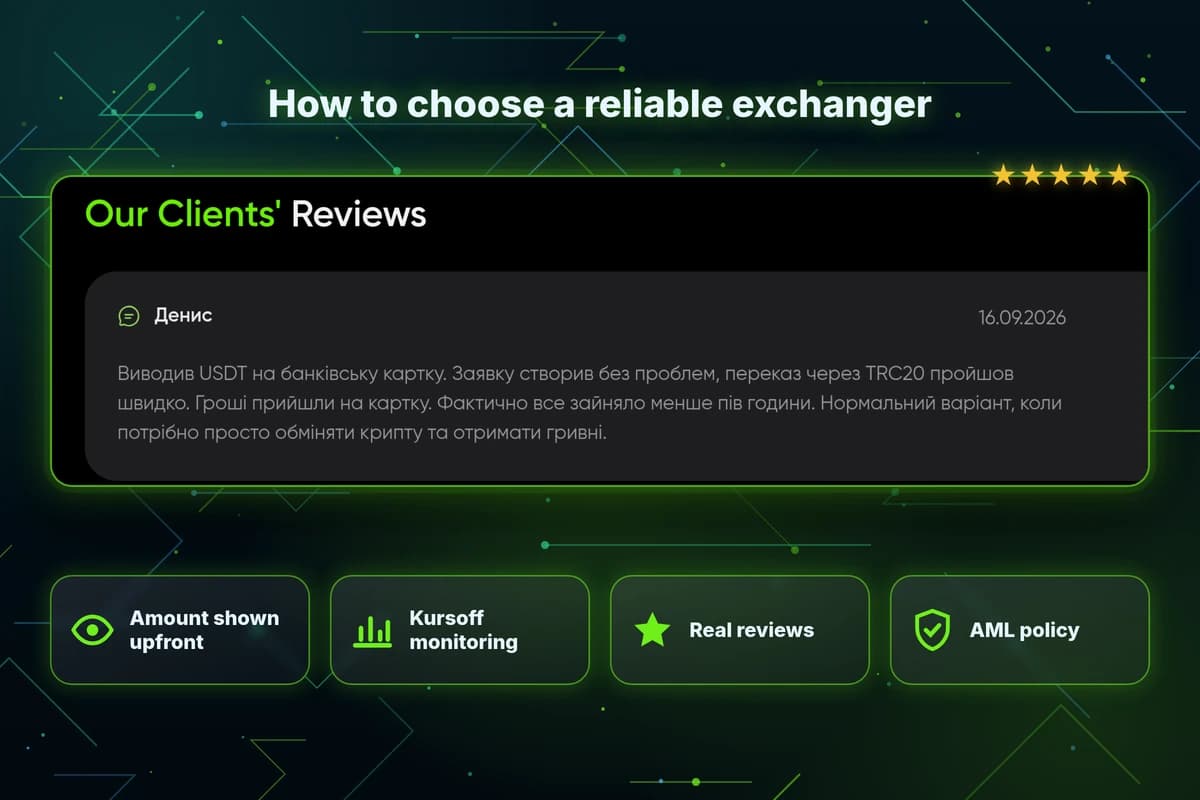
A search for "where to sell USDT for hryvnia profitably" returns dozens of exchangers, and at first glance they hardly differ from each other. The difference shows up in details that are worth checking before the first deal, not after it.
A transparent amount. The service should show the final amount to be received before the request is created. If the final figure appears only after the USDT has been sent or is "to be confirmed by a manager", that is a reason to be cautious.
Presence in independent monitoring services. Exchangers listed on rate monitoring platforms are vetted by the platform and are in full view of thousands of users, so it does not pay for them to risk their reputation. Coinmoneyhub, for example, is connected to the Kursoff monitoring platform. It is also worth reading customer reviews and paying attention not only to the ratings but also to how the service responds to complaints.
Clear rules. A reliable exchanger publishes its exchange terms and an AML policy, and its support answers to the point rather than with templates. More criteria with specific examples are collected in the article on how to choose a reliable crypto exchanger.
When selling USDT through an exchanger pays off most
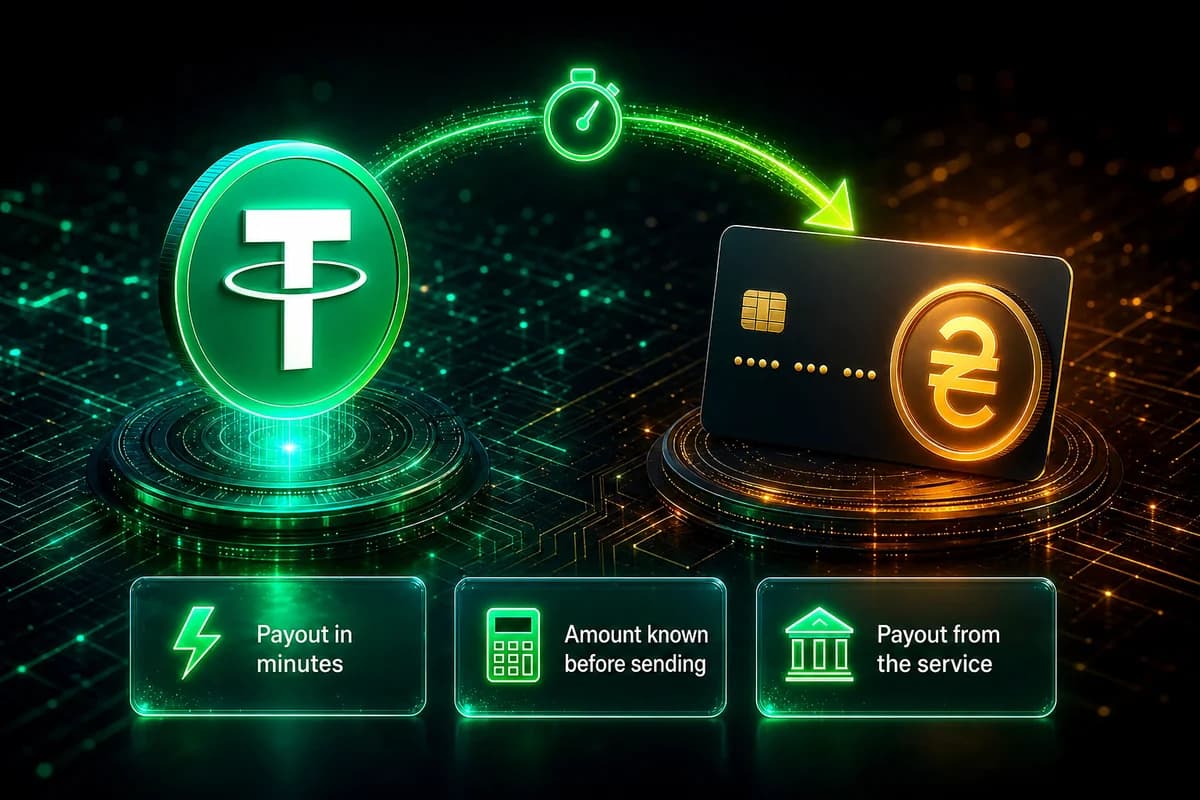
Selling USDT through a crypto exchanger is justified when speed, a predictable amount and minimal risk from the bank's side matter. The user sees in advance how much hryvnia they will receive, and the payout comes from the service itself.
If the goal is to receive hryvnia on a PrivatBank, Monobank, PUMB, Oschadbank or any other Ukrainian bank card within a few minutes, an exchanger remains the simplest route. For those who are just figuring out how to withdraw USDT to hryvnia, it is useful to start with a general overview of the methods.
The practical rule is simple: before selling, check the network, the address and the payout details, compare the amount to be received rather than the headline rate, and choose a service that shows the final figure before you send the cryptocurrency. This approach spares you most unpleasant surprises – both in the final amount and in the nerves spent on the process itself.
