
What Is a crypto wallet and how to choose a reliable one?
Any operation with digital assets — whether it's buying usdt or exchanging crypto on an exchange — starts with the same tool: a crypto wallet. It's not a physical wallet in the usual sense, but a software or hardware solution that lets you manage access to coins on the blockchain. Without one, it's impossible to receive USDT after an exchange, send cryptocurrency to another user, or store assets long-term.
The emergence of crypto wallets is a direct consequence of blockchain's decentralized nature. Unlike a traditional bank account, where an institution centrally tracks a client's funds, in the crypto world the ledger is maintained by the blockchain itself — a distributed ledger where access to an entry is confirmed cryptographically. This is exactly the function a wallet performs — access and confirmation — acting as a kind of "key" to a personal entry in the shared transaction ledger.
For those just starting to explore digital money, it's important to understand: cryptocurrency never "sits" inside a wallet physically, unlike cash in a paper wallet. Coins always remain an entry on the blockchain, and the wallet simply provides access to that entry through a pair of keys — public and private. This fundamental distinction explains why losing access to a wallet (for example, through loss of the private key) means an actual loss of funds, even though the record of them continues to exist on the blockchain forever.
For users who plan to regularly exchange crypto, buy usdt, or invest in long-term assets, a wallet is needed from the very first step: it's where tokens arrive after any transaction on an exchange service or exchange, and from there they're later sent onward — for payment, storage, or another exchange.
How a crypto wallet works
Every wallet generates two linked entities: a public address and a private key. These two elements are mathematically linked through asymmetric cryptography algorithms, yet calculating the private key from the public address alone is practically impossible — this property is what the entire security of crypto transactions rests on.
The public address is what a user shares with others to receive funds, for example when buying usdt trc20 through an exchange service. It can be freely shared, published, or reused — it poses no threat to the security of funds, much like a bank account number that alone doesn't allow money to be withdrawn. The private key, by contrast, must remain completely secret — it's what confirms ownership of the funds and allows transactions to be signed, effectively authorizing the blockchain to move coins from one address to another.
The process of signing a transaction happens automatically inside the wallet: when a user initiates a transfer, the app builds the transaction, signs it with the private key, and sends it to the network for confirmation by blockchain nodes. The private key itself is never transmitted openly — only mathematical proof that the key's owner did indeed authorize the operation.
If the private key falls into a third party's hands — through a phishing site, malware, or careless storage — that party gains full control of the wallet and can withdraw all assets with no way to reverse or dispute it, since blockchain transactions are irreversible. That's why the rule "not your keys, not your coins" has become one of the basic principles in crypto: it's a reminder that the true owner of assets is whoever controls the private key, not whoever's name is formally attached to an account.

Types of crypto wallets
The market offers dozens of solutions for storing cryptocurrency, but they all fall into a few basic categories based on their level of network connectivity and control over keys. Understanding these differences helps make an informed choice — a wallet for small daily transactions and a wallet for storing large sums need to meet different security requirements.
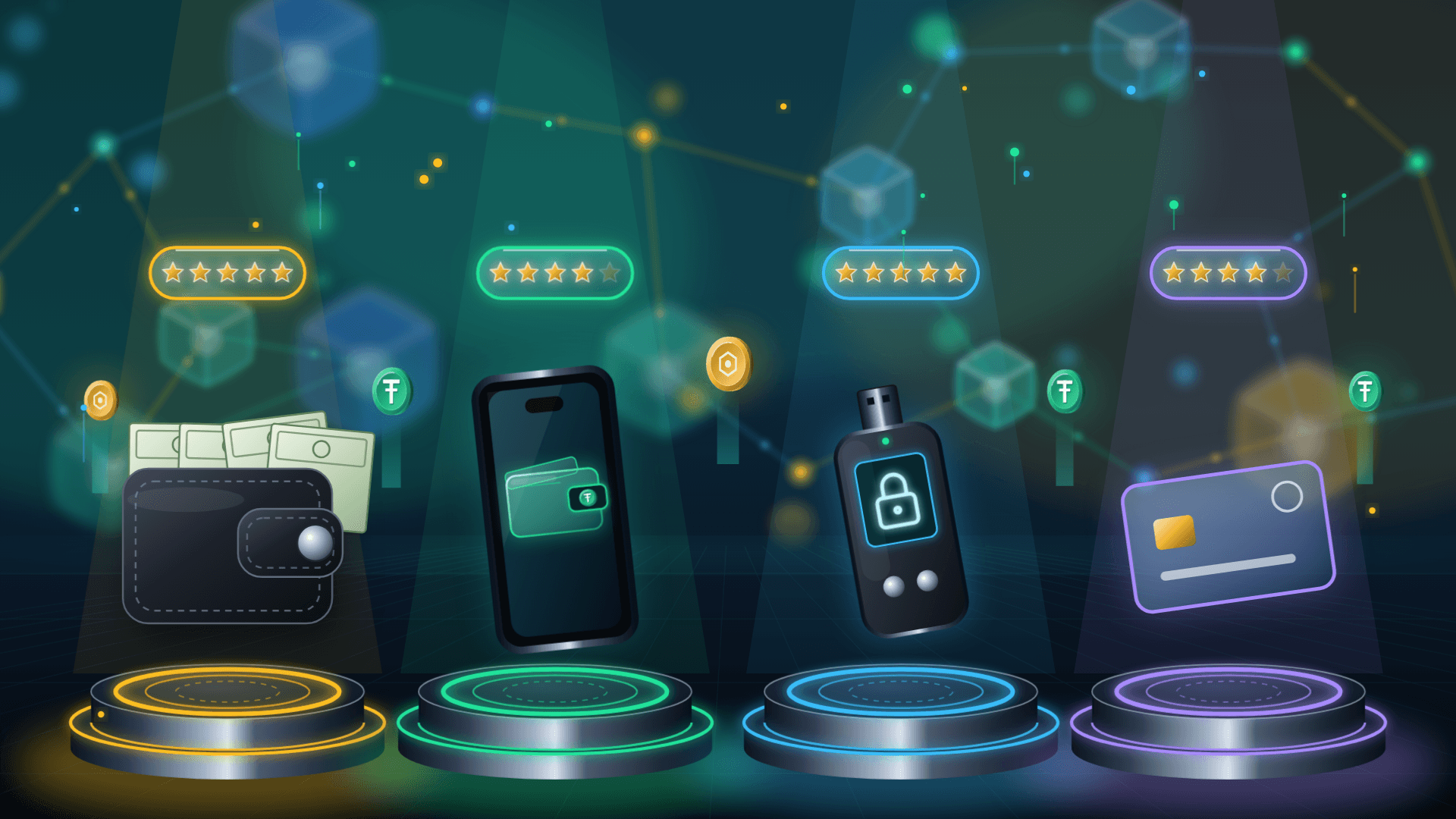
- Hot wallets. Hot wallets are apps or browser extensions that stay constantly connected to the internet: mobile apps, desktop programs, web wallets. They're convenient for everyday use — for example, when you need to quickly exchange crypto or top up a balance for trading. Setup usually takes a few minutes, the interface is intuitive even for beginners, and access to funds is available around the clock from any device. The main drawback is increased vulnerability to hacking and phishing, since private keys are stored on a device connected to the network. Because of this, hot wallets are generally recommended for small amounts needed for current operations rather than for storing your main capital.
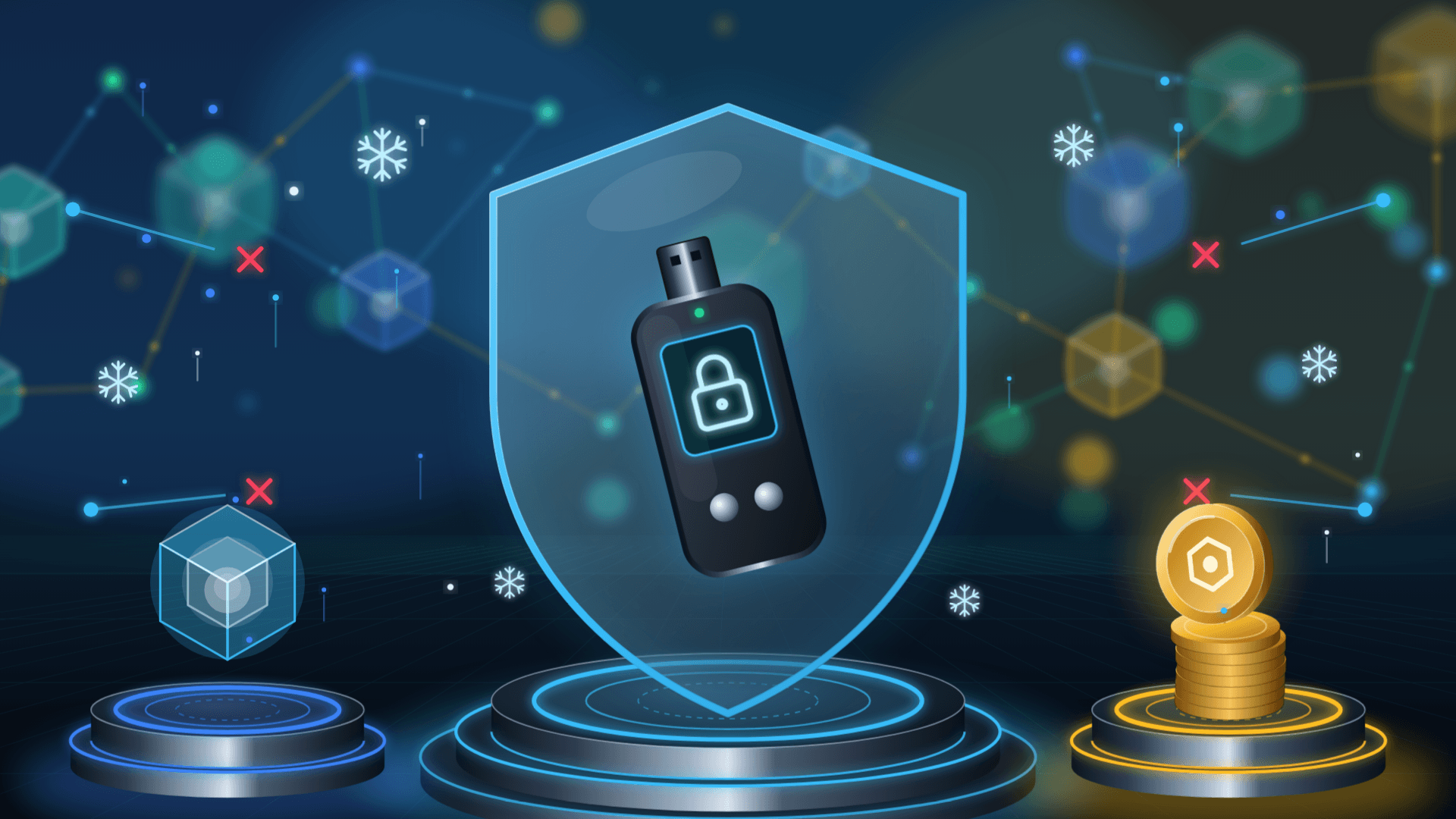
- Cold wallets. Cold wallets have no permanent internet connection. This category includes hardware devices (hardware wallets), small USB-like devices, and paper wallets, where keys are physically recorded on a medium not connected to the network at all. Signing a transaction on a hardware wallet happens inside the device itself, so the private key never touches the internet even at the moment of the transaction. This storage method significantly reduces the risk of a hack, which is why cold wallets are most often chosen for long-term storage of large cryptocurrency amounts — so-called "cold storage." For users who invest long-term or hold significant sums after a series of usdt purchases, this inconvenience is justified by the added level of protection.
- Custodial vs. non-custodial solutions. Wallets also differ by who controls the keys — custodial, where private keys are held by a third party (such as an exchange or exchange service), and non-custodial, where the user retains full control over the keys. Custodial solutions are simpler for beginners, but depend on the reliability of the intermediary platform. Non-custodial wallets require more responsibility from the user but give full control over assets — this is the option typically recommended for storing funds after buying usdt or other cryptocurrency, when maximum independence from third parties matters.

What to look for when choosing a wallet
Choosing a wallet isn't a one-time decision but a long-term investment in the security of your own funds, so it's worth approaching carefully, weighing several key criteria.
- Support for the networks you need. Before you buy usdt trc20 or usdt erc20, make sure the wallet you've chosen supports the corresponding network — the wrong choice can lead to loss of funds. Many wallets support several networks and token types at once, which is convenient for users working with different cryptocurrencies simultaneously, but it's worth specifically checking support for the networks you'll use most often.
- Reputation and open source code. Reliable wallets have a transparent development history, open source code, and positive community feedback. Open source code allows independent cybersecurity experts to check the app for vulnerabilities, significantly boosting trust compared to closed solutions from unknown developers. It's also worth checking whether the wallet has undergone an independent security audit and whether it has an active user community able to quickly flag problems.
- Two-factor authentication. An extra layer of protection significantly reduces the risk of unauthorized access even if an attacker learns the app's password. Choose wallets that support modern identity verification methods — one-time codes, biometrics, or hardware security keys — rather than just a basic PIN.
- Backup capability. A wallet should provide a seed phrase — a set of 12 or 24 words for restoring access if a device is lost, damaged, or the app is deleted. The quality of this backup is critical: a wallet without the ability to obtain a seed phrase effectively ties funds to one specific device, significantly raising the risk.
- Active support and updates. Regular updates indicate that developers are fixing vulnerabilities and keeping the app current with changes in the relevant blockchain networks. Wallets that haven't been updated in a long time may contain unpatched vulnerabilities or fail to support new token standards and networks.
- Interface convenience. Even the most secure wallet loses its value if it's hard for the user to work with. A clear interface, localization into Ukrainian or Russian, and quick access to core functions (sending, receiving, viewing balance) matter especially for those just getting started with cryptocurrency.
- Transaction fees. Some wallets let you flexibly adjust the network fee depending on how fast you want confirmation, while others set fixed parameters. For users who regularly exchange crypto, this flexibility can significantly affect overall costs over time.
Common user mistakes
Even experienced crypto market participants sometimes make mistakes that cost them money, and the vast majority of losses stem not from sophisticated hacking attacks but from ordinary carelessness in everyday wallet use.
- Storing the seed phrase in cloud services or screenshots. One of the most common and, at the same time, most dangerous ways to "conveniently" keep access to a wallet is photographing the seed phrase or saving it in phone notes, Google Drive, or iCloud. Any cloud service is potentially vulnerable to a breach, and a screenshot on a device can be stolen by malware. The safest option is to write the phrase down by hand on paper and store it somewhere inaccessible to others, ideally in several copies in case of damage.
- Using one wallet for everything. When the same wallet is used simultaneously for daily small transactions, trading, savings storage, and interaction with various DeFi protocols, risks accumulate. One compromised site or malicious smart contract the user interacted with can put all funds at risk at once. It's smarter to separate wallets by purpose: one for current spending and crypto exchanges, another for long-term storage of your main capital.
- Ignoring app updates. Wallet developers regularly release updates that close discovered vulnerabilities and add support for new networks and token standards. Users who delay installing updates remain exposed to already known, documented threats that attackers can exploit.
- Clicking suspicious links. Phishing sites that mimic official wallet or exchange service pages remain one of the most effective tools scammers use. Always check a site's address before entering a private key or seed phrase, and avoid clicking links from unverified sources, including in messengers and social media.
Following these basic security rules helps avoid most losses — ones caused not by market volatility, but by human error.

Popular wallets on the market
Among the most widely used solutions, crypto owners worldwide tend to pick from a few categories depending on their needs.
For daily operations and interacting with DeFi protocols, Trust Wallet and MetaMask are popular — mobile and browser wallets supporting a large number of networks with a convenient interface, suitable for both beginners and experienced users. For long-term storage of significant cryptocurrency amounts, hardware wallets are more often chosen, with Ledger and Trezor among the best-known — physical devices that enable offline transaction signing and a high level of private key protection. Users active in the TON ecosystem typically choose Tonkeeper, a wallet adapted specifically for that network's features.
The choice of a specific wallet depends primarily on which networks and coins a user plans to use most often, as well as the balance between everyday convenience and the level of security needed for storing funds.
The wallet and exchanging USDT on Coinmoneyhub
Once a wallet is chosen and set up, you can move directly to crypto transactions. Coinmoneyhub offers crypto exchange at a favorable rate: simply provide your wallet address on the right network (TRC-20 or ERC-20), and tokens will arrive within minutes of payment confirmation.
The wallet is the final destination of any usdt purchase — tokens arrive there right after payment is confirmed, and from there they can be sent onward for trading, storage, or another exchange. That's why it's especially important to check in advance which network your wallet supports, since trying to receive usdt erc20 at an address set up for the TRC-20 network (or vice versa) can lead to an unrecoverable loss of funds. Coinmoneyhub lets you select the right network directly in the order form, minimizing the risk of this kind of mistake.

A crypto wallet is the foundation of any work with digital assets, from storage to everyday transactions. The right choice between hot and cold, custodial and non-custodial depends on the user's goals: convenient mobile apps suit active trading, while hardware wallets are worth considering for long-term storage. By following basic security rules — from safely storing the seed phrase to regularly updating the app — you can avoid most risks and comfortably enjoy the benefits of digital assets.
Once your wallet is ready to go, the last step remains — making the exchange itself. Check the current usdt purchase rate and complete your crypto exchange on Coinmoneyhub quickly, affordably, and with no hidden fees.

