
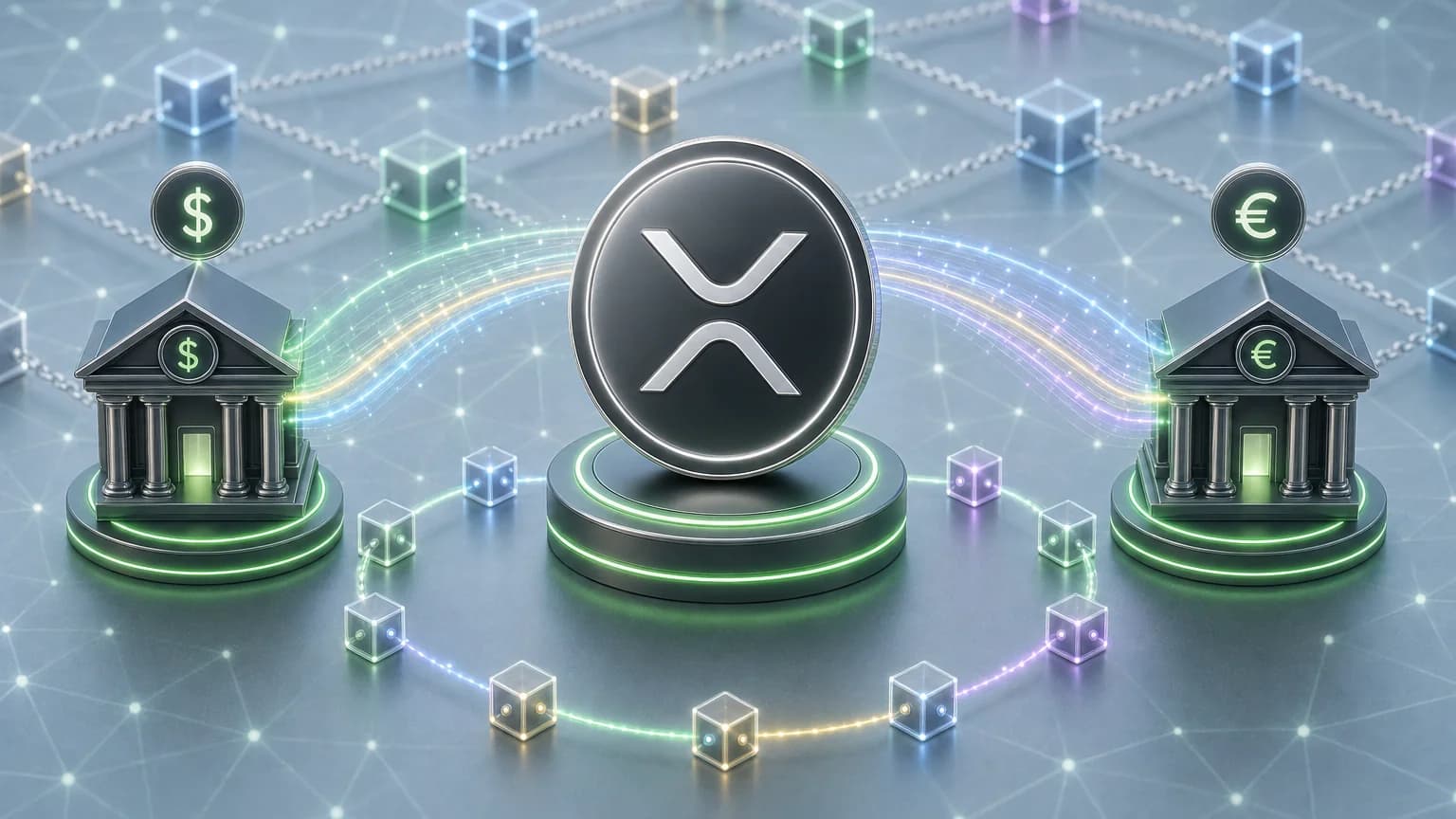
Ripple (XRP): a coin for interbank transfers
What is XRP?
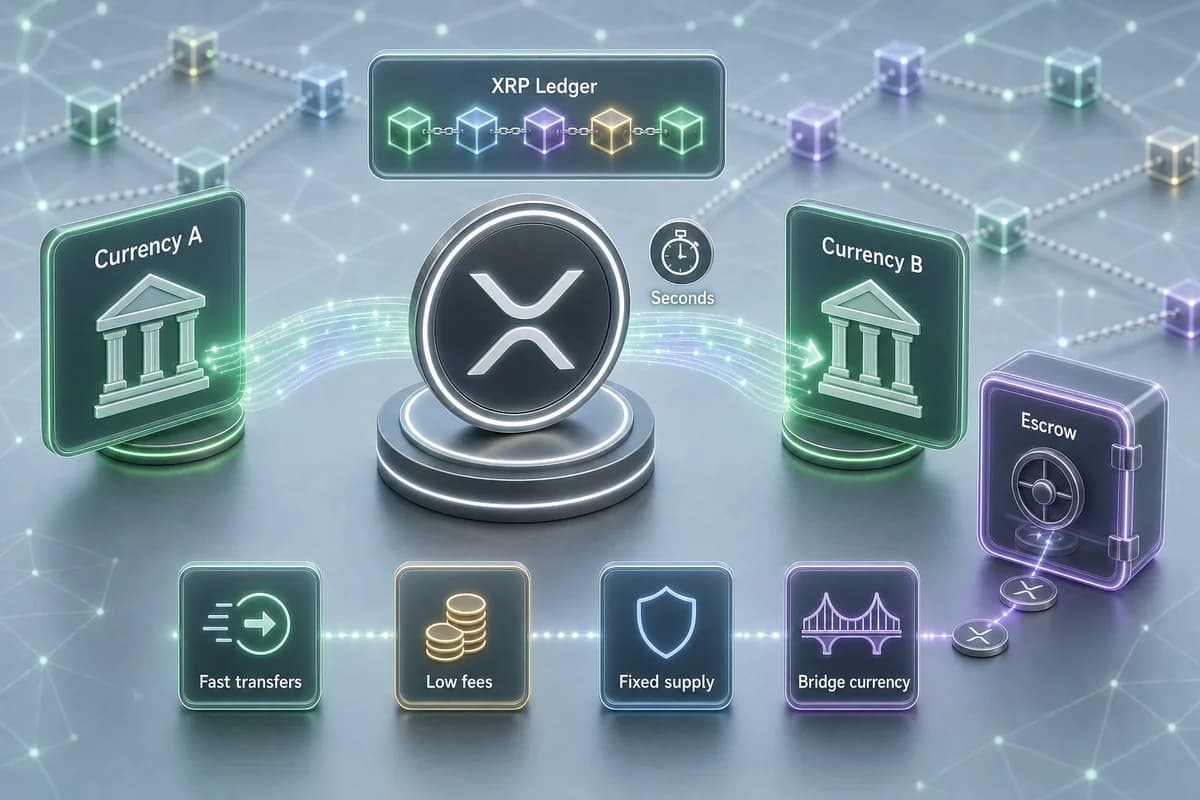
XRP is a cryptocurrency created for fast, cheap transfers of value between different financial systems. Unlike Bitcoin, which positions itself as digital gold, or USDT, which is pegged to the dollar, XRP was designed from the start as a settlement tool: a kind of "bridge" between different currencies and payment networks. The token runs on its own blockchain, the XRP Ledger, and is notable for extremely fast transaction confirmation: a few seconds instead of the minutes or hours typical of many other networks.
When the network launched in 2012, a fixed supply of 100 billion XRP was issued. Unlike Bitcoin, where new coins are gradually mined, all XRP was created at once and no further issuance is planned. A significant portion of this supply was allocated to Ripple, the company, which releases coins to the market gradually on a predetermined schedule through escrow accounts. This was meant to make the supply predictable and reduce the risk of a sharp price collapse from a large volume of tokens being sold at once.
Users can use XRP like any other cryptocurrency: store it in a wallet, send it to other network participants, trade it on exchanges, or convert it into stablecoins and fiat money. Still, the token's main value shows up in large financial transfers, where its speed and low transaction cost give a tangible practical advantage over traditional tools.
What Is Ripple
Ripple is a technology company, founded in 2012, that built the RippleNet payment infrastructure and took an active part in developing the XRP Ledger. The company positions itself not as a crypto startup in the classic sense but as a provider of technology solutions for banks, payment providers, and financial institutions that want to make cross-border settlements faster and cheaper.
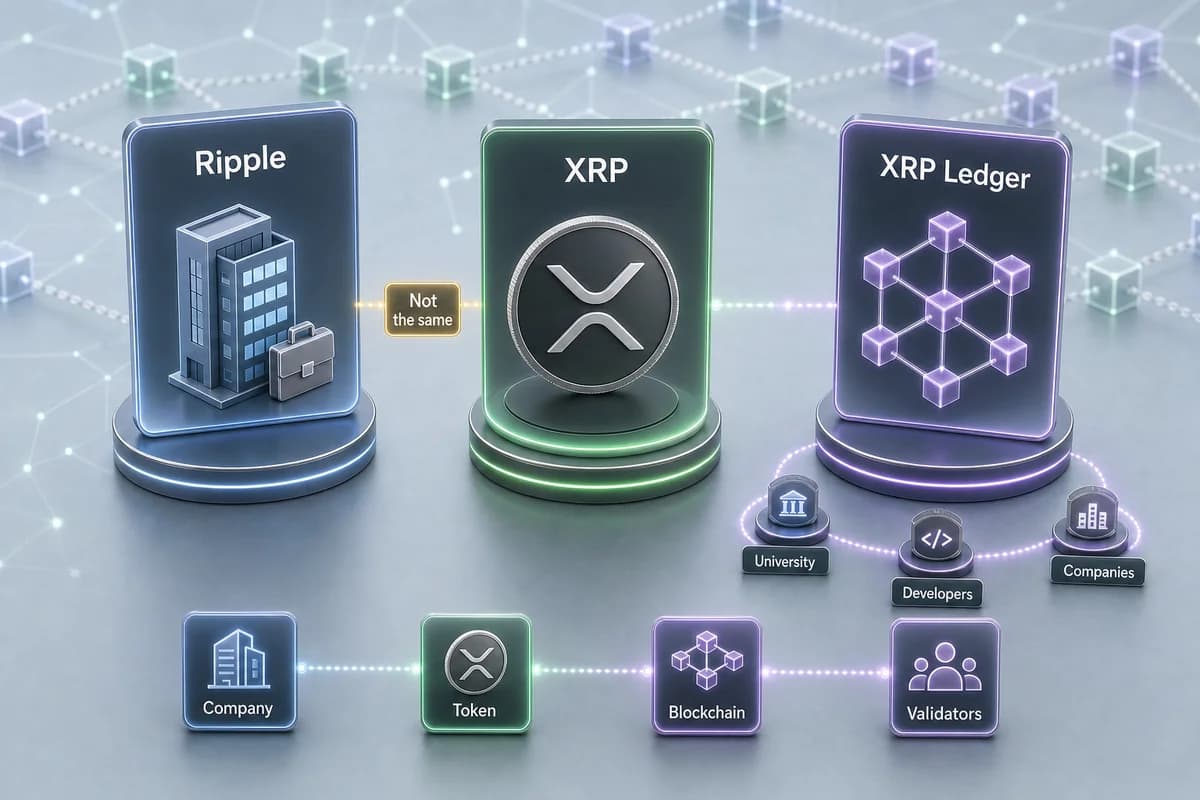
It is important to understand that Ripple (the company) and XRP (the cryptocurrency) are not the same thing, even though the names are often used interchangeably in everyday speech. The company offers cross-border payment solutions to banks and financial institutions, and it is in this context that XRP sometimes serves as an auxiliary intermediary asset. Ripple's products cover several areas: from On-Demand Liquidity (ODL), a solution that uses XRP for instant conversion between currencies, to purely software tools for messaging between banks that don't require any cryptocurrency at all.
Over the years, Ripple has formed partnerships with dozens of financial institutions and payment companies around the world, actively positioning itself as an alternative to outdated international settlement infrastructure. At the same time, the company remains private: its shares are not traded on a public exchange, and owning XRP tokens gives holders no corporate rights or stake in Ripple itself.
The Difference Between Ripple, XRP, and the XRP Ledger
To avoid the confusion that often arises even among experienced cryptocurrency users, it's worth clearly separating three related but distinct concepts.
Ripple is a company that develops payment solutions for the financial sector. It has its own staff, offices, investors, and corporate structure, like any other technology business. Ripple develops software, forms partnerships with banks, and promotes its own products on the market.
XRP is a cryptocurrency, the native token of the XRP Ledger. Unlike the company, XRP has no management or office of its own. It is a digital asset that millions of users around the world can own and trade, regardless of their relationship with Ripple the company.
XRP Ledger (XRPL) is a decentralized, open-source blockchain on which XRP operates. The network exists independently of Ripple the company and is maintained by a broader community of developers, validators, and participants. Technically, the XRP Ledger could keep running even in the hypothetical situation where Ripple ceased to exist, since the network is not its private property.
Ripple is one of the participants in the XRP Ledger ecosystem and one of the largest holders of XRP, but it does not control the network alone: the nodes that confirm transactions are distributed among independent participants, including universities, exchanges, and other technology companies involved in validation. This structural distinction between the company, the token, and the network often becomes the subject of legal and regulatory debates, since the legal status of the XRP token is not necessarily identical to the status of Ripple the company.
How XRP Works
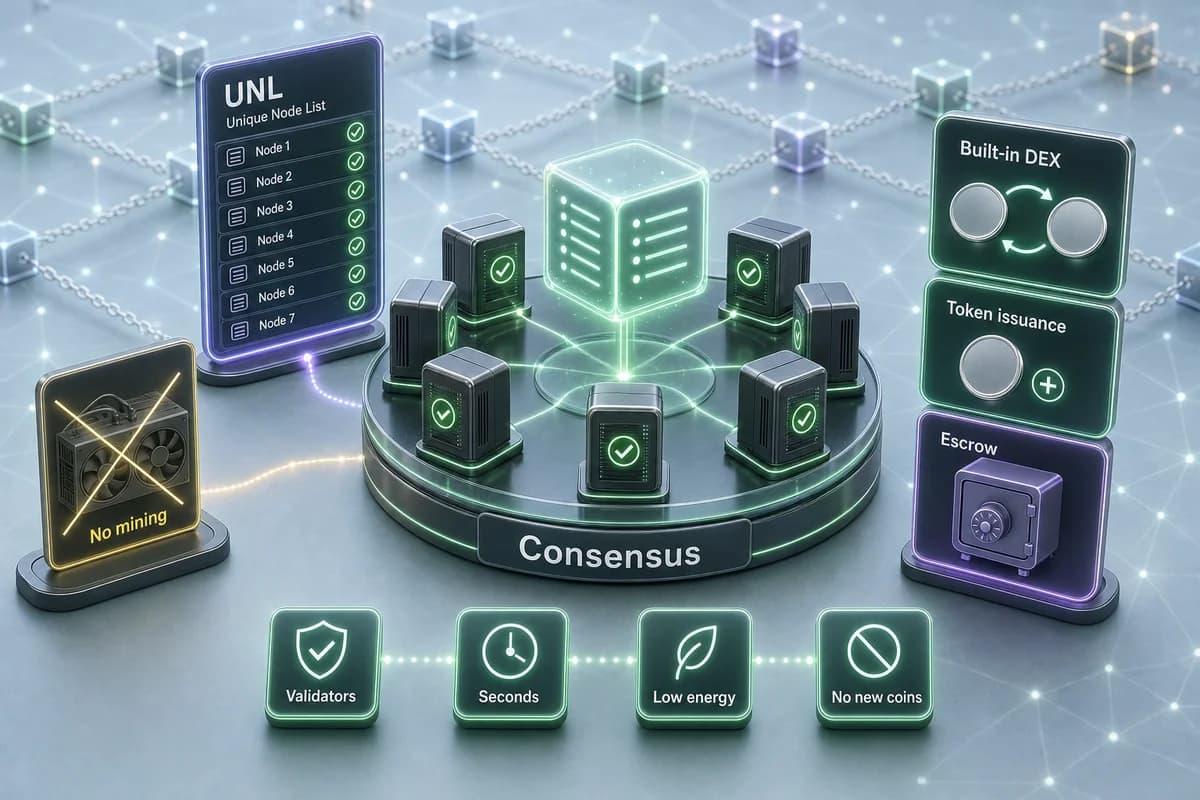
The XRP Ledger is a blockchain launched in 2012 that uses a unique consensus protocol instead of the classic mining typical of Bitcoin and other proof-of-work networks. Rather than competing for computing power, the network relies on a group of independent validators who agree on the state of the ledger among themselves every few seconds. This approach allows transactions to be processed much faster and with minimal energy use compared to traditional mining.
The list of trusted validators in the XRP Ledger is formed through the so-called Unique Node List (UNL), a list of nodes that network participants trust by default to reach consensus. Importantly, this list is not rigidly fixed or controlled exclusively by Ripple: each node operator can choose which validators to trust, and the network itself has evolved over time toward broader decentralization. Today, validators include universities, exchanges, infrastructure companies, and independent enthusiasts from different countries.
Beyond the basic function of transferring funds, the XRP Ledger supports additional features: a built-in decentralized exchange (DEX) for swapping tokens directly on the network, issuance of custom tokens by third-party developers, and escrow functionality for gradually unlocking funds on a set schedule. This is exactly how Ripple manages the release of its XRP reserve to the market.
XRP and Traditional Cryptocurrencies
Unlike Bitcoin or Ethereum, where transactions are confirmed through proof-of-work or proof-of-stake mechanisms with a broad, open circle of anonymous participants, the XRP Ledger relies on a limited list of trusted validators that the network trusts by default. This makes the system significantly faster and more energy-efficient, but it also prompts debate about its level of decentralization compared with classic cryptocurrencies, where in theory anyone with the necessary hardware can take part in the confirmation process.
Another fundamental difference is the absence of a mechanism for issuing new coins. With Bitcoin, new tokens gradually enter circulation through block rewards, which makes mining an economically motivated process that also secures the network. The XRP Ledger doesn't need such an incentive, since the entire token supply was issued at the network's launch, and further distribution happens through controlled escrow mechanisms rather than mining.
In terms of purpose, Bitcoin and Ethereum have evolved into multifunctional platforms: the former as a store of value, the latter as a base for smart contracts and decentralized applications. XRP, in turn, has kept a narrower but clearly defined specialization: fast, cheap settlement between different currencies and financial systems. This focus on a single task has allowed the network to optimize its architecture specifically for payment scenarios, without spreading itself across functionality unrelated to transferring value.
Why XRP Suits International Transfers
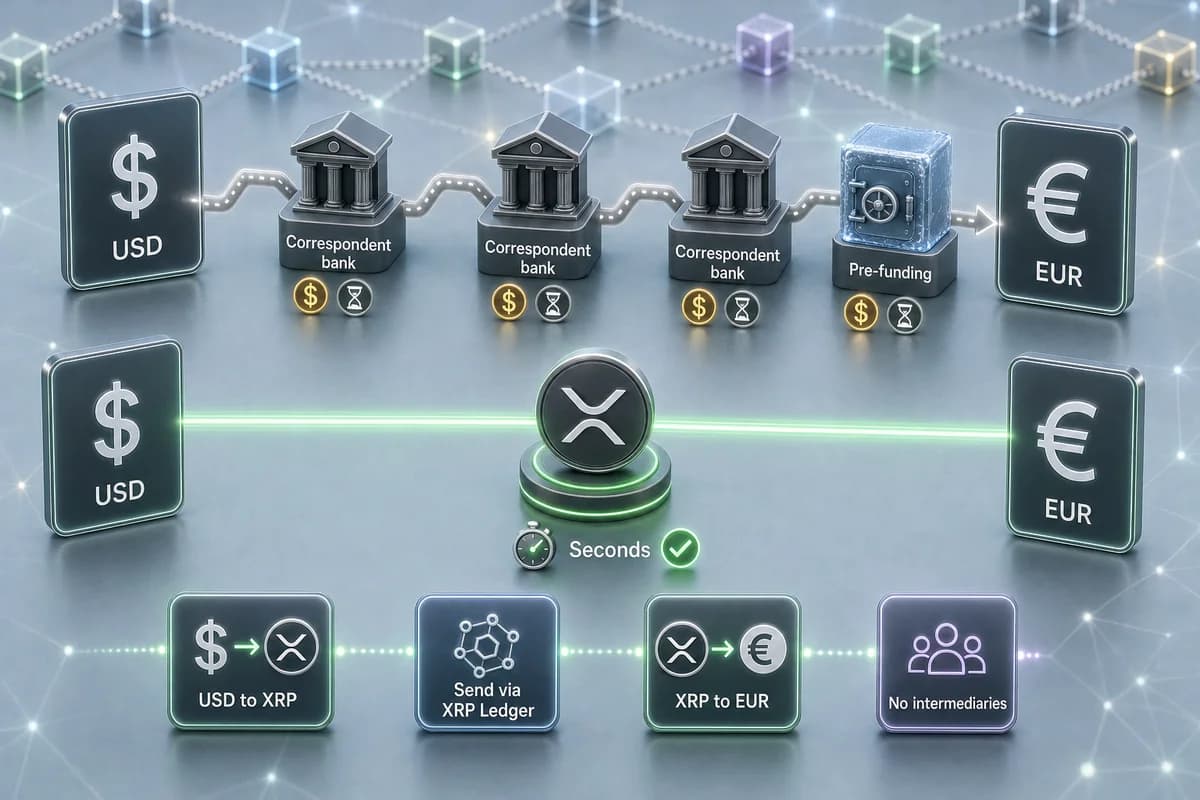
The classic international transfer system involves funds passing through a chain of correspondent banks, each of which charges its own fee and adds delay. When the sender's bank has no direct relationship with the recipient's bank in another country, the transfer has to "travel" through one or more intermediary financial institutions, each performing its part of processing, verification, and currency conversion.
Such a chain creates several problems at once. First, each intermediary bank adds its own processing fee, and the final amount the recipient gets is often smaller than expected because of the hidden charges accumulated at each stage. Anyone who has ever sent money abroad and seen the difference between the amount sent and the amount received will recognize this. Second, a transfer can take from one to several business days, especially if the route passes through banks in different time zones or with mismatched non-working days.
Third, banks have to maintain so-called pre-funding: freezing significant sums of foreign currency in accounts across dozens of countries "just in case," so they can make a transfer instantly without waiting for funds to actually arrive from the counterparty. This frozen capital doesn't work, earns no income, and significantly raises the operating costs of financial institutions, which are ultimately passed on to end customers as higher fees.
Example of a USD → XRP → EUR Transfer
Let's simplify the scheme with a hypothetical example. An institution in the US is instructed to transfer funds to a partner in Europe. Instead of sending dollars through a chain of 2–3 correspondent banks, the institution converts the amount into XRP at the current market dollar-to-XRP rate.
The tokens are transferred over the XRP Ledger directly to the partner's address in Europe within 3–5 seconds, with no intermediary banks, no delays from different time zones, and no need to reconcile message formats between different banking systems. Once it receives the XRP, the European partner (or a payment provider acting on its behalf) immediately converts the tokens back into euros at the current market rate and credits the funds to the final recipient's account.
The whole chain, which traditionally could take several days and pass through 3–4 intermediary banks with fees at each stage, is in theory reduced to a single direct transaction lasting a matter of seconds, with minimal network cost for the transfer itself. The main expenses in such a scheme come not from the XRP transfer itself but from the spread on entering and exiting the position, that is, the difference between the buy and sell rates for XRP at each of the two conversion stages. This makes market liquidity a critical factor in the success of such operations.
XRP and Interbank Transfers: How Banks Can Use XRP
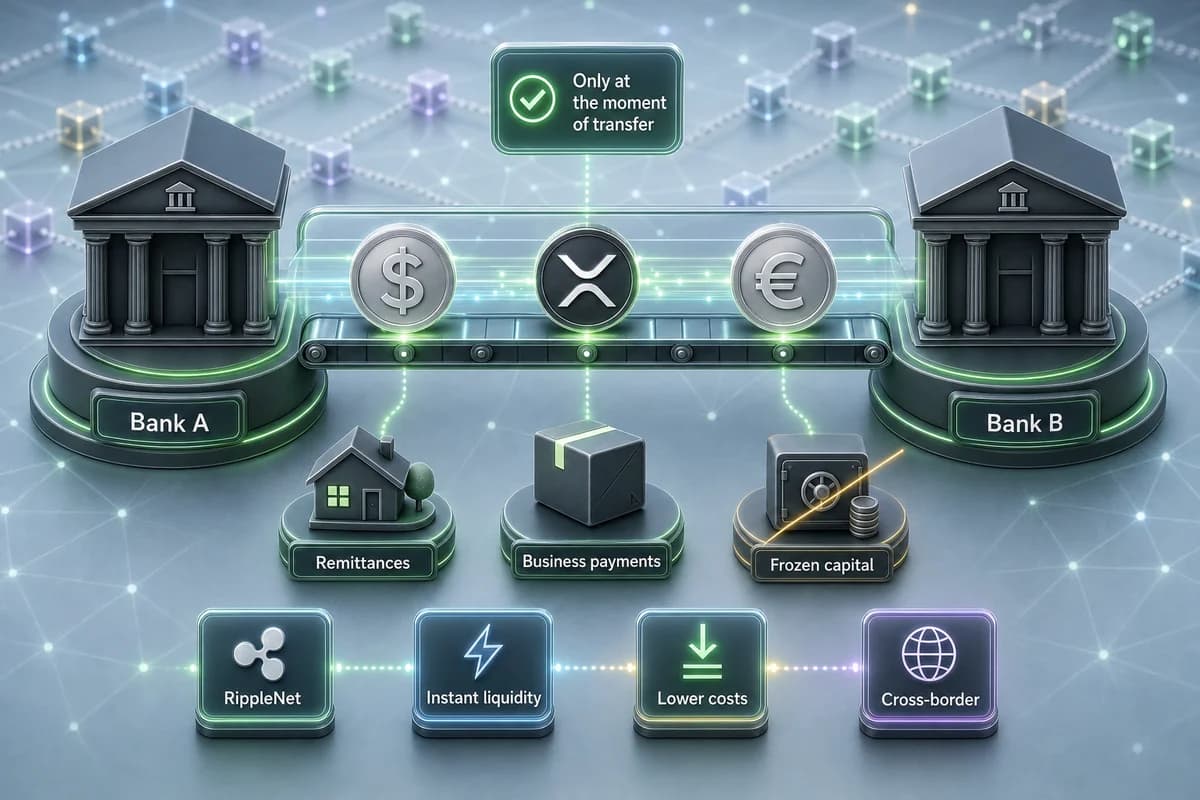
Banks and payment providers can integrate XRP into their own infrastructure through RippleNet-based solutions, using the token as an instant-liquidity tool for cross-border settlements instead of freezing capital in correspondent accounts in various currencies. Technically, integration happens through APIs that connect internal banking systems to the XRP Ledger network, allowing conversion and transfers to be initiated without manually managing wallets or interacting with the blockchain directly.
One of the key products in this area is Ripple Payments, a solution developed by Ripple specifically for financial institutions. Instead of buying and holding XRP on its balance sheet in advance, the bank converts national currency into XRP only at the moment of a specific transfer, and immediately, at the other end of the chain, converts the received XRP back into the recipient country's currency. This approach lets institutions benefit from XRP's speed and liquidity without exposing them to the long-term risks of holding a volatile asset on their balance sheet for an extended period.
For banks handling a large volume of cross-border payments, for example those serving migrants who regularly send money home, or international businesses, such a model could in theory significantly cut operating costs and speed up request processing, improving the customer experience compared with traditional transfer times.
Cross-Border Payments
For businesses working with international suppliers or partners, such a model in theory means faster settlements and predictable conversion costs, without having to wait for confirmation across several time zones and banking systems. This is especially relevant for companies making regular payments in several currencies at once, such as importers or exporters working with partners in dozens of countries.
Companies in the remittance sector get a particular benefit. It's an area traditionally marked by high fees because of the large number of small international transactions. For migrants who regularly send money to family in another country, the difference between a fee of several percent of the transfer amount and the minimal cost of a transaction on the XRP network can be significant over the course of a year.
At the same time, it's worth understanding that the speed and cheapness of the XRP transfer itself is only one part of the overall cross-border payment chain. The final speed and cost for the customer also depend on the efficiency of conversion at entry and exit, the payment provider's fees, and regulatory procedures that may apply regardless of the technology underlying the transfer.
Ripple's Role in Payment Infrastructure
Ripple continues to develop partnerships with financial institutions around the world, offering them ready-made settlement solutions, from software for exchanging payment messages to full integration with On-Demand Liquidity. Over its years of operation, the company has signed agreements with banks, payment providers, and fintech companies on different continents, positioning itself as an alternative to outdated international settlement infrastructure.
It should be noted, however, that far from all of Ripple's partners necessarily use XRP as the bridge asset. Some of the company's solutions work without direct involvement of the cryptocurrency, limited to software for message exchange between banks (similar to the function SWIFT traditionally performs). This is an important detail: a partnership with Ripple does not in itself mean an institution automatically uses XRP in its settlements.
After the settlement of a long-running legal dispute with the US regulator in 2025, the company gained greater clarity about the legal status of its activities in one of the world's largest financial markets. According to Ripple itself, this opened additional opportunities for expanding cooperation with institutional partners that had previously refrained from integration because of regulatory uncertainty.
Ripple vs. SWIFT: How SWIFT Works and What's the Difference
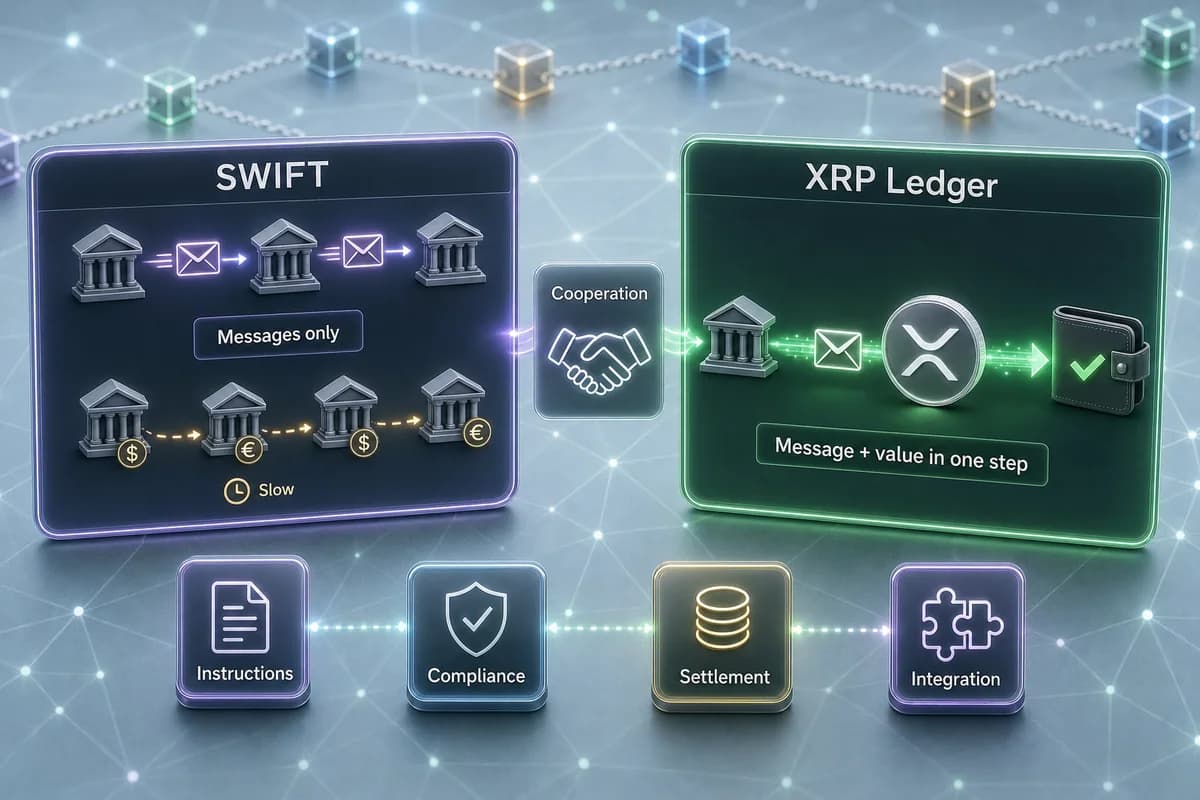
SWIFT (Society for Worldwide Interbank Financial Telecommunication) is a network for transmitting standardized messages between banks, founded back in 1973 and today connecting thousands of financial institutions in more than two hundred countries. It's important to understand a key feature of this system: SWIFT itself does not move funds. It only coordinates transfer instructions, telling the recipient's bank that a certain amount must be credited to a specific customer.
The actual movement of money still happens through a chain of correspondent banks that have direct account relationships with each other or are connected through intermediary institutions. When the sender's bank has no direct link to the recipient's bank, the SWIFT message passes through one or more intermediary banks, each performing its part of payment processing (verification, currency conversion, compliance procedures), and only then do the funds actually reach the final recipient. This preserves all the structural delays and hidden fees inherent in the traditional model of international settlement, even though the message transmission itself is almost instantaneous.
In recent years, SWIFT has also been developing its own initiatives to speed up transfers, in particular the SWIFT gpi service, which allows payment status to be tracked in real time and significantly reduces processing time compared with the classic model. Still, even with these improvements, the structural problem of the correspondent bank chain doesn't go away: gpi optimizes message transmission but does not eliminate the need to move funds through intermediary accounts.
Advantages of Blockchain Payments
Blockchain solutions like the XRP Ledger combine the transmission of instructions and the actual movement of value in a single step, with no need for intermediary correspondent accounts. When a transaction is confirmed by the validator network, the funds are credited to the recipient and recorded in an immutable public ledger at the same time. In SWIFT, by contrast, message confirmation does not guarantee instant actual receipt of money.
This structural difference gives blockchain solutions several practical advantages. First, the absence of intermediary banks means no additional fees at each stage of the chain: the user pays only the cost of the network transaction itself, which for the XRP Ledger is measured in fractions of a cent. Second, a blockchain network operates around the clock without days off, whereas traditional bank transfers depend on the working schedules of the participating institutions in different time zones. Third, the transparency of the public ledger lets any participant independently verify a transaction's status without relying solely on the bank's assurances about what stage a transfer is at.
At the same time, it should be noted that these advantages are most fully realized at the stage of the transfer itself between two points of the network. Conversion into local currency at entry and exit, as well as compliance with regulatory requirements on each side of the operation, remain separate processes that are not eliminated by the mere fact of using a blockchain.
Can XRP Compete with SWIFT
A direct comparison is complicated by the fact that SWIFT is a messaging network with decades of integration into the banking system, deeply embedded in the regulatory and operational infrastructure of thousands of financial institutions worldwide. XRP, meanwhile, offers a fundamentally different, alternative settlement model that requires separate technical integration and a willingness on the part of banks to work with crypto assets.
In practice, most banks continue to use SWIFT as their main channel for international transfers. Changing established infrastructure, on which institutions' compliance procedures, reporting, and operational processes are built, is a complex and slow process requiring significant investment and readiness for regulatory change. XRP-based solutions remain a niche, though gradually expanding, supplement to existing infrastructure rather than a complete replacement for it.
A more realistic scenario is not the direct replacement of SWIFT by the XRP Ledger network but gradual cooperation and partial integration: banks can use SWIFT for transmitting instructions and compliance checks while bringing in XRP-based solutions specifically for the actual conversion and movement of value, where this delivers tangible savings in time and money. Such a hybrid model lets institutions gradually test the benefits of blockchain settlement without immediately abandoning infrastructure proven over decades.
Advantages of XRP for International Payments
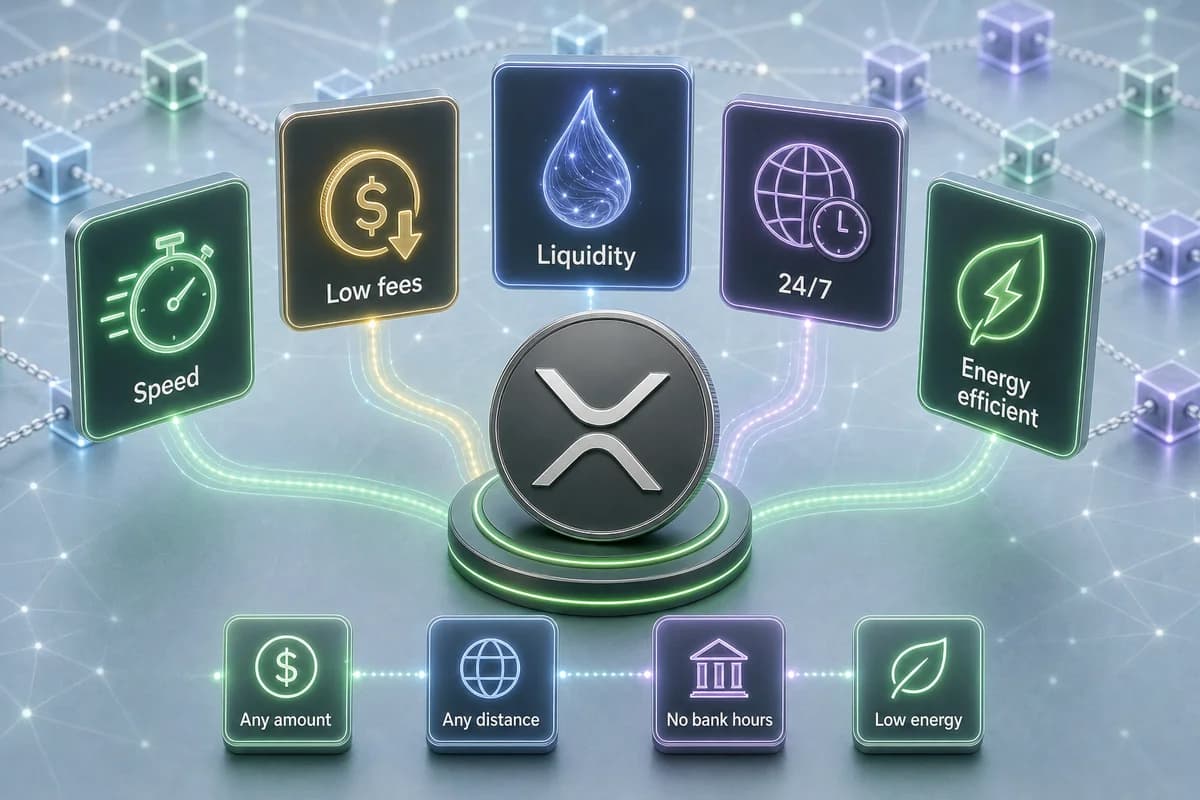
Speed. Transactions on the XRP Ledger are confirmed within 3–5 seconds regardless of the transfer amount or the geographic distance between sender and recipient. By comparison, a traditional international bank transfer through a chain of correspondent banks can take from one to five business days, especially if the route passes through institutions in different time zones with mismatched non-working days. This difference becomes critical for businesses that need urgent settlements with foreign partners, as well as for financial institutions seeking to speed up their own internal clearing processes.
Low fees. The cost of a transaction on the XRP Ledger is measured in fractions of a cent regardless of the amount transferred, whether it's a few dollars or an operation worth millions. Traditional international transfers, by contrast, are often accompanied by fees in the form of a fixed percentage of the amount plus additional charges from each intermediary bank in the correspondent chain. For companies that regularly make a large number of cross-border payments, and for individuals sending money to family abroad, the accumulated fee savings can be substantial over a year.
Liquidity. XRP is among the cryptocurrencies with the highest market capitalization and trades on the vast majority of major global exchanges, which provides a deep market and minimal slippage even in large operations. High liquidity is critical specifically for the bridge-asset scenario: for conversion through XRP to actually save money compared with traditional channels, the market must have enough depth to handle large amounts without noticeably affecting the rate at the time of the trade.
Global availability. The XRP Ledger operates around the clock, seven days a week, with no ties to banking hours, weekends, or public holidays in any particular country. A user or financial institution can initiate a transfer at any moment, regardless of whether the participating banks in a traditional correspondent chain are open. This is especially valuable for operations between countries with different working calendars and time zones, where a traditional transfer could get "stuck" until the start of the next business day on the other side of the world.
Energy efficiency. The XRP Ledger's consensus protocol consumes significantly less energy than proof-of-work networks like Bitcoin, because transactions are confirmed through agreement between validators rather than a computational race with enormous electricity costs. For financial institutions that increasingly weigh environmental (ESG) criteria when choosing technology partners and solutions, this factor may carry additional weight alongside the purely economic metrics of speed and cost.
Disadvantages and Risks of XRP
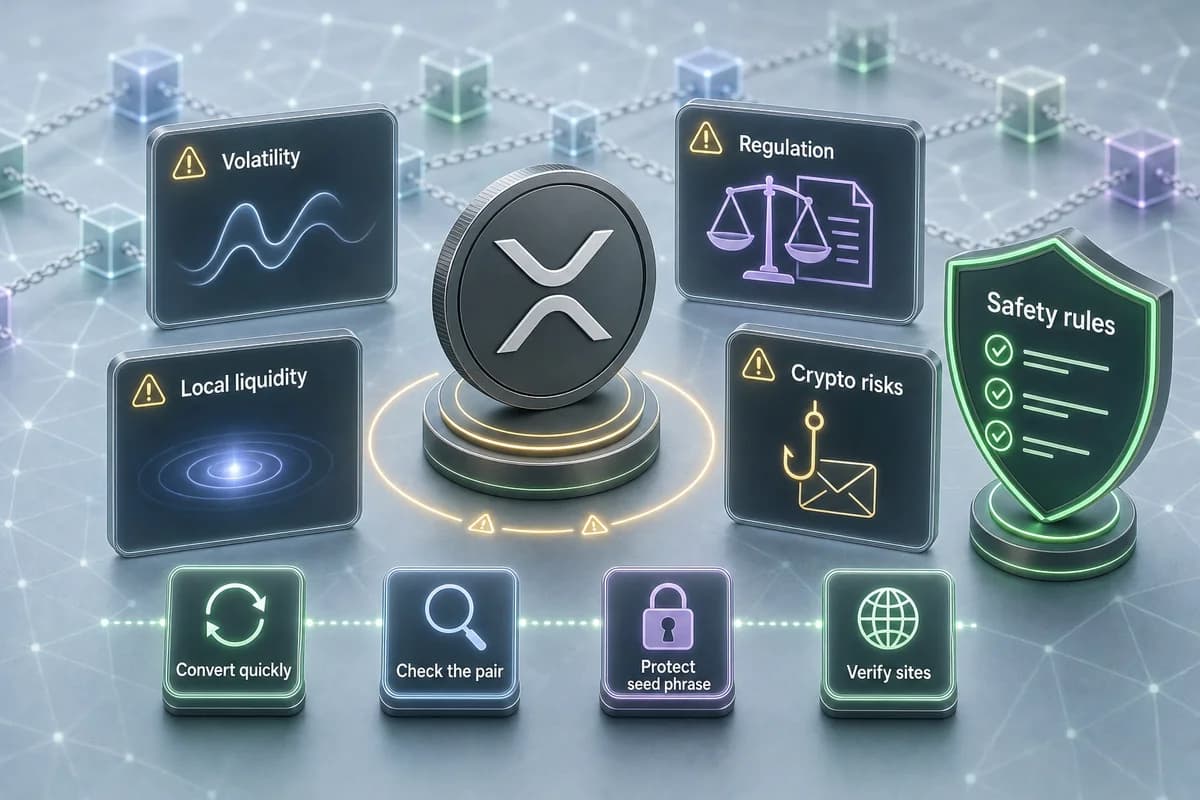
Volatility. Like most cryptocurrencies, XRP is subject to sharp price swings, which complicates its use as a stable settlement instrument without instant conversion on entering and exiting the position. For the bridge currency model, this volatility is partly neutralized by the asset being held for only a few seconds during the transfer. However, for those planning to hold XRP longer, for example as an investment, price fluctuations remain a significant risk factor.
Regulatory risks. For several years, XRP's status was the subject of a lengthy legal proceeding between Ripple and the US regulator, the SEC, which argued that the token's sale constituted an unregistered securities offering. The case was finally closed in 2025: back in July 2023 the court ruled that sales of XRP to retail investors on exchanges are not securities transactions, and in August 2025 both sides dropped their appeals. Nevertheless, the regulatory situation in different jurisdictions remains uneven, so it's worth keeping track of current requirements in your specific country before using XRP for commercial purposes.
Liquidity in individual markets. Despite XRP's generally high liquidity on major global exchanges, market depth may be lower on smaller local platforms or in less common currency pairs. This affects the rate in large operations: the lower the liquidity of the pair, the more price slippage the user will feel, which partly cancels out the savings on fees.
Cryptocurrency market risks. The general risks inherent in the entire crypto sphere, such as technical failures at exchanges, wallet vulnerabilities, phishing attacks, and fraudulent schemes, apply to XRP as well. Users should follow basic security rules: keep private keys and seed phrases in a safe place, check addresses before sending funds, and choose only trusted platforms for trading and exchange.
Can XRP Be Used for Ordinary Transfers
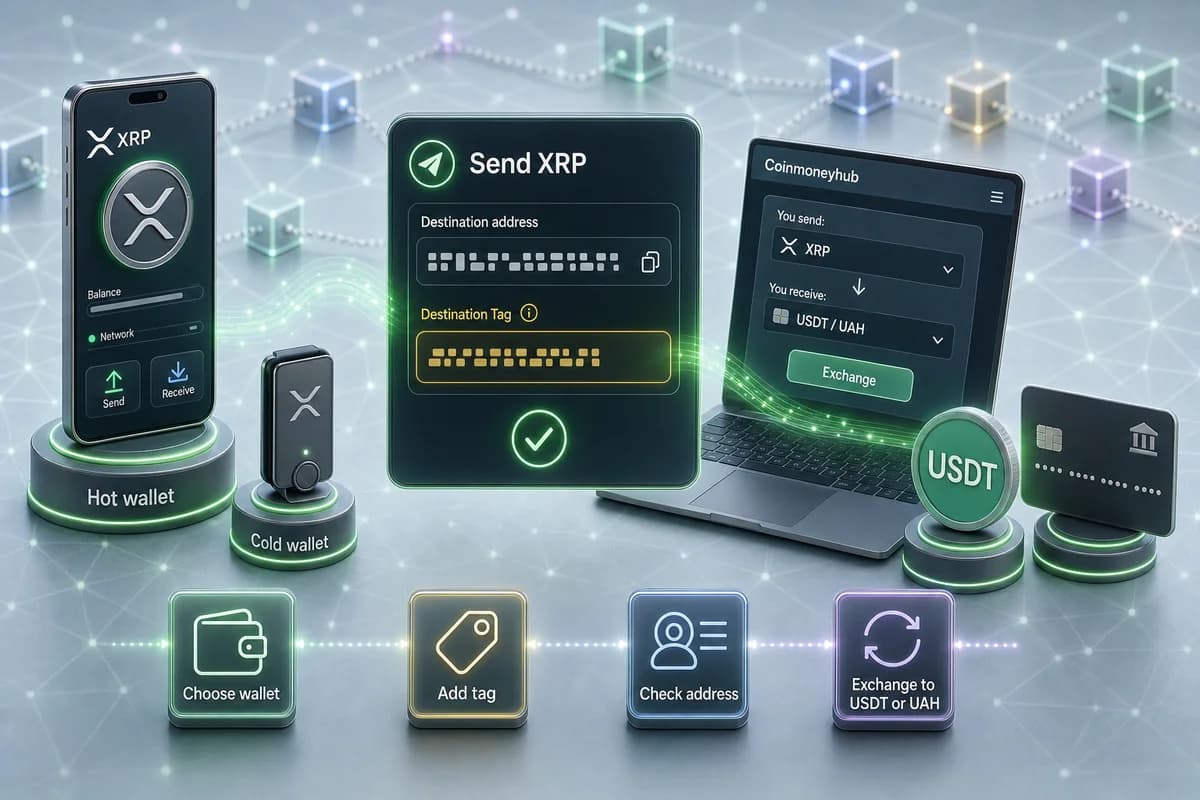
Beyond institutional use in interbank settlements, XRP is also perfectly suitable for ordinary transfers between private users. Thanks to its confirmation speed and low fees, it's a convenient tool for sending funds to friends, family, or business partners anywhere in the world. Unlike a traditional bank transfer, where the sender needs the recipient's account details, sending XRP only requires knowing the recipient's public wallet address on the XRP Ledger.
One technical feature that distinguishes XRP from many other cryptocurrencies is worth noting: for some wallets and exchanges, sending XRP requires specifying an additional identifier, the so-called destination tag. This is a numeric value that helps the receiving platform correctly allocate funds among its users' internal accounts if it uses a shared wallet address for many customers at once. Omitting a required tag when sending to an exchange can result in the funds not being automatically credited to a specific account, so before making a transfer it's worth carefully checking the receiving platform's requirements. When you exchange on Coinmoneyhub, the address and tag for sending XRP are in your order: copy both from there.
For ordinary transfers between private wallets (without an intermediary exchange), a destination tag is usually not needed; it's enough to specify the recipient's correct public address. The transaction itself, regardless of the amount, is confirmed within a few seconds, which makes XRP a convenient option even for urgent transfers when a traditional bank channel would be too slow.
XRP Wallets
Both hot wallets (mobile apps, browser extensions, desktop programs) and hardware cold wallets for long-term storage of large sums are suitable for storing XRP. Hot wallets are convenient for everyday operations and quick access to funds, while hardware solutions provide a higher level of private key protection through offline storage, which is especially relevant for significant amounts.
The main thing is to make sure the chosen wallet officially supports the XRP Ledger and its specific address format, since XRP addresses have their own structure, different from Bitcoin or Ethereum addresses. Another technical feature of the network should also be kept in mind: to activate a new wallet, the XRP Ledger requires a minimum reserve of tokens to be held in the balance (the so-called reserve requirement). These funds are not spent but merely "locked" in the account as a condition of its existence on the network, which serves as a mechanism protecting the ledger from spam with empty accounts.
When choosing a wallet for XRP, the same basic criteria apply as for any other cryptocurrency: open-source code, a good reputation in the community, the ability to back up via a seed phrase, and support for additional authentication methods.
Buying and Selling XRP
XRP can be bought or sold on most major cryptocurrency exchanges, as well as through specialized exchange services that work with a wide range of coins, including conversion into stablecoins or fiat currency. The buying process usually isn't fundamentally different from purchasing any other popular cryptocurrency: the user selects a trading pair (for example, XRP/USDT or XRP/UAH), specifies the amount, and confirms the operation at the current market rate.
For those just getting acquainted with cryptocurrencies, XRP's high liquidity on most platforms means that buying or selling even significant amounts usually happens without a substantial effect on the rate. Still, as with any volatile asset, it's worth watching the current market price carefully before making a trade, especially for a large amount.
Exchanging XRP for USDT or Fiat
For users who want the stability of USDT instead of volatile XRP, direct conversion from one asset to the other is available. It's a convenient option for those who want to lock in profit or simply move funds into a less volatile stablecoin without first withdrawing to traditional currency. Such conversion is especially relevant for market participants who use XRP as a transfer tool but don't want to be exposed to price fluctuations when holding the received funds afterward.
An alternative is a direct exchange of XRP for hryvnia, which lets you withdraw funds immediately without intermediate conversion into USDT. The choice between these two routes usually depends on whether the user plans to use the funds soon for further crypto operations (in which case it makes more sense to hold USDT) or needs hryvnia on a card.
Exchanging XRP via Coinmoneyhub
Coinmoneyhub allows you to exchange cryptocurrencies, including converting XRP to USDT or hryvnia, at a transparent rate. If you need more USDT after exchanging XRP, you can buy it for hryvnia with a separate order right here, without switching to another service. The rate and the service fee are shown upfront, with no hidden fees or floating rates, so you see how much you will receive before you send XRP.
How to exchange XRP: 4 steps
- Create an order.
- Get the payment details.
- Send XRP (address and tag from the order).
- Receive USDT or hryvnia on your card.
For those who regularly work with several cryptocurrencies at once, the convenience lies precisely in being able to carry out various crypto exchange operations in one place, from converting XRP to stable USDT to withdrawing directly to a hryvnia card, without having to register on several different platforms or move funds between exchangers.
Conclusion
XRP remains a unique example of a cryptocurrency created specifically for interbank and international transfers, rather than as a speculative asset or a store of value. Confirmation in a few seconds, minimal fees, and the bridge-asset concept make XRP an attractive alternative to traditional channels like SWIFT, although fully replacing the established banking infrastructure remains a long-term prospect rather than the current reality of the next few years.
At the same time, XRP is entirely accessible to ordinary users too, from simple transfers between private wallets to conversion into more stable assets to preserve value. For those who already hold or have received XRP, a convenient next step is exchanging crypto for USDT or directly for hryvnia, which you can do quickly, at a transparent rate and with no hidden fees, on Coinmoneyhub.
