
Tron (TRX): network overview, rate, advantages and exchange to hryvnia
What Tron Is and How the Project Began
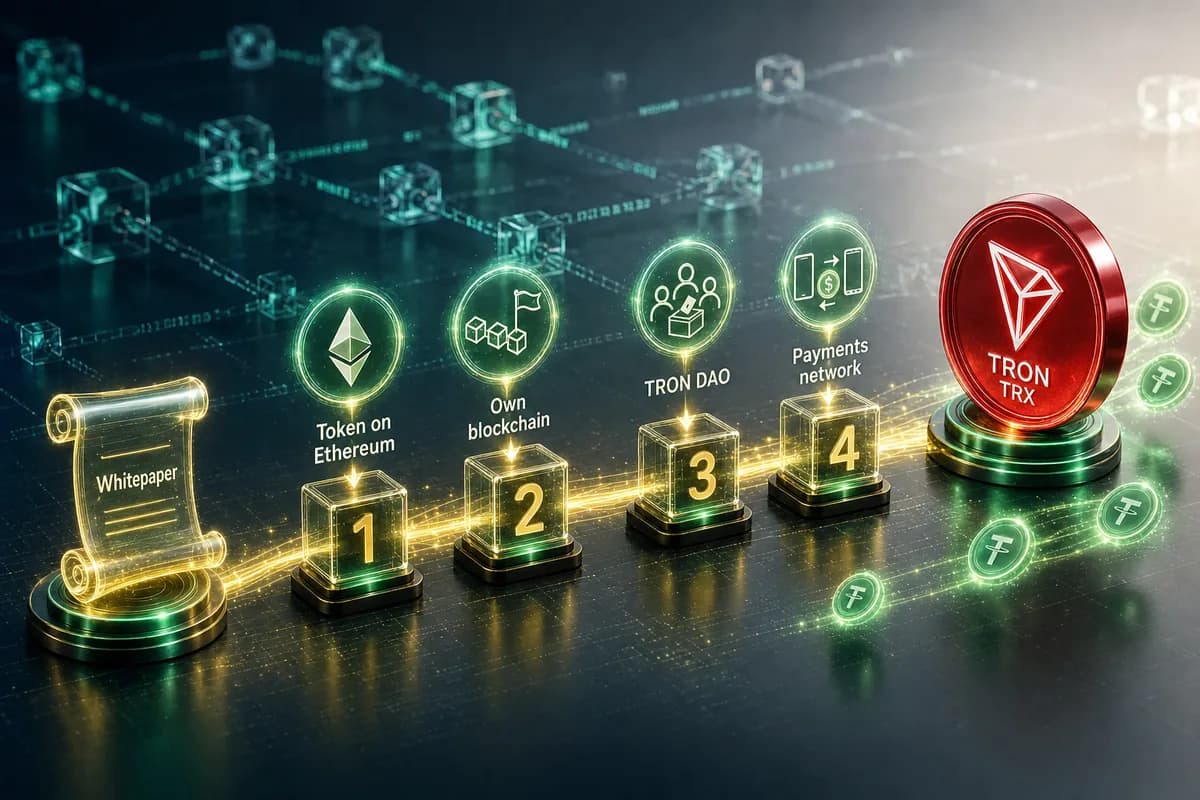
Tron began with an ambitious idea: to create an open digital space where content creators, musicians, developers, and users interact directly, without large intermediary platforms that take a share of the revenue and dictate the rules. In its 2017 white paper, the project was described as decentralized infrastructure for sharing content and applications. Over time the emphasis shifted, but the foundation remained: an open network with its own economy, where anyone can build services and earn without the permission of a central owner.
Today Tron is seen primarily as a payment and settlement network rather than an entertainment platform. This evolution is clear from the numbers: the network processes enormous volumes of transfers, and its token, TRX, is among the coins known even to those just starting out with cryptocurrencies. To understand how the project reached this point, it helps to walk through the key stages of its history.
Launch History and the Role of Justin Sun
The project was founded in 2017 by entrepreneur Justin Sun, and the Tron Foundation was registered in Singapore. At first, the TRX token was issued as a standard Ethereum-based token, and in that form the coin reached its first exchanges. The public fundraising ended the same year, and the team immediately announced its intention to build its own blockchain. The development plan was called Great Voyage and consisted of several stages, from launching the main network to building an ecosystem of content, games, and decentralized applications.
On May 31, 2018, the main network went live, and tokens were migrated from Ethereum to the new blockchain. The community and the team itself called that day the project’s “independence day”: from then on, Tron had its own rules, its own validators, and its own economic model. That transition also matters in practical terms. It was then that the TRC-10 and TRC-20 token standards appeared, which later became the basis for issuing thousands of assets on the network.
Among the early moves that drew the market’s attention was the acquisition of the torrent service BitTorrent in 2018. For Tron, it was a chance to reach a huge audience already accustomed to decentralized file sharing and to try combining it with a blockchain economy. Just as visible was Sun himself: his public activity, statements, and initiatives regularly shaped the news background around the coin. Some see this as an advantage, since the project has a recognizable leader and a clear vision. Others see it as a risk, because the ecosystem’s reputation is closely tied to one person.
TRON DAO: How the Network Is Governed
At the end of 2021, the project announced a transition to a decentralized autonomous organization model, which it called TRON DAO. The idea was to gradually shift influence from the founder and the foundation to a broader community. Today TRON DAO presents itself as a community-governed organization that accelerates the decentralization of the internet through blockchain and applications.
In practice, decisions about the network’s development follow a formal process. A participant submits a proposal, it is discussed openly, and then validators vote. A recent example: Proposal 108 took effect on November 2, 2026, after 25 approvals, with voting running from October 30 until 12:00 UTC on November 2. This procedure shows how the network evolves, from an idea on GitHub to a parameter activated on the main network.
Tron’s technical updates often follow Ethereum standards. For example, the network earlier updated the behavior of the SELFDESTRUCT opcode in line with TIP-6780, aligning smart contract behavior with Ethereum’s latest rules. This makes it easier for developers to move their solutions between ecosystems.
The TRX Token: Purpose and Functions
TRX is the native cryptocurrency of the Tron network, and its role is much broader than that of a mere “trading coin.” It works in several dimensions at once, and they are closely intertwined.
First, TRX keeps the network running. Sending transactions and running smart contracts requires computing resources, which are obtained either by staking TRX or by burning some of the coins. Without this token, even the simplest operation on the network would be impossible. Second, TRX serves a governance function: an owner who stakes coins receives votes and can support chosen validators. Third, TRX is a liquid asset traded on major exchanges and exchanged for other cryptocurrencies, including BTC, ETH, USDT, and other popular coins.
In addition, the token is used as a unit of account in decentralized applications: in DeFi protocols, games, and NFT marketplaces. Overall, TRX combines the technical and economic sides of the network: it is both the “fuel” for transactions, a voting tool, and a trading asset. This versatility explains why the coin has remained among the best-known cryptocurrencies for many years.
How the Tron Blockchain Works
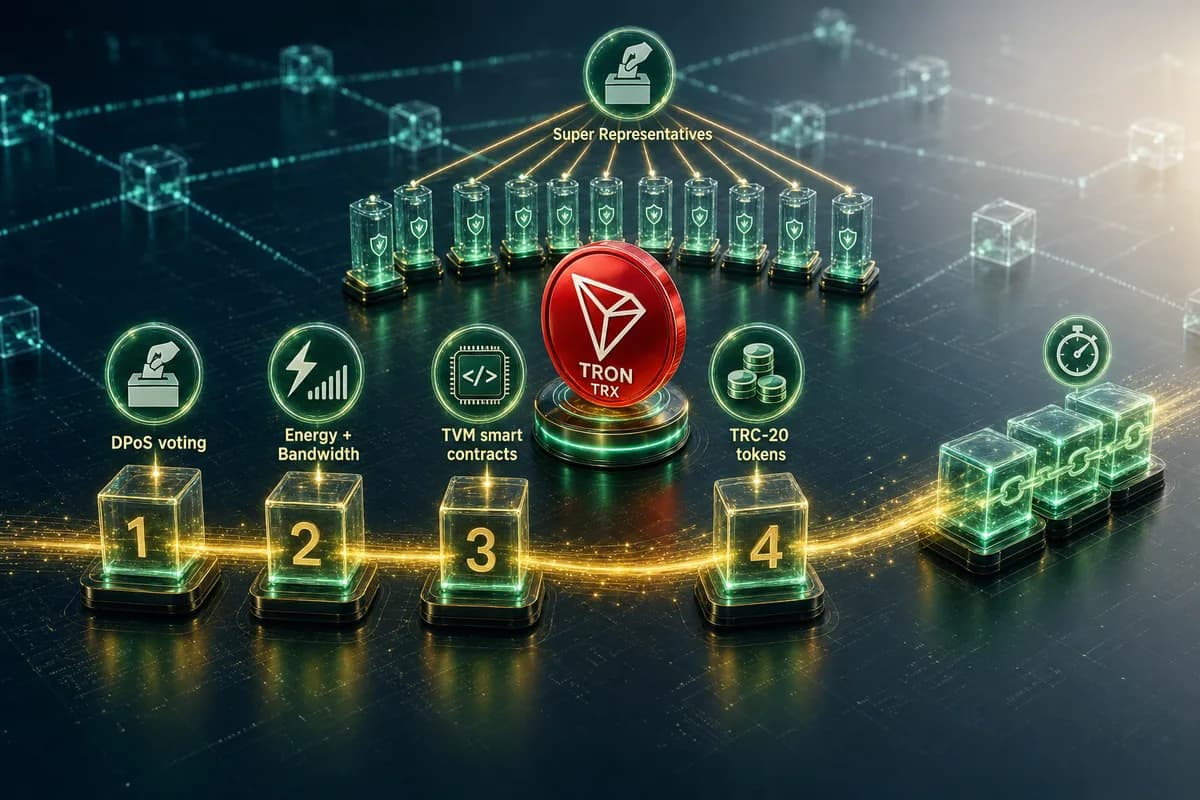
To understand why Tron became popular in payment scenarios, it helps to look at its architecture. It is built to confirm transactions quickly and remain accessible to ordinary users, not just large players. Three elements define its character: the consensus mechanism, a resource model instead of traditional fees, and a virtual machine compatible with Ethereum.
DPoS Consensus and Super Representatives
Tron runs on a delegated proof-of-stake mechanism, known as DPoS. In classic mining networks, participants compete for the right to create the next block, spending huge amounts of computing energy. Tron takes a different approach: TRX holders elect a limited circle of validators called Super Representatives, or SRs for short.
The active set consists of 27 SRs, who take turns producing blocks and receive a reward for doing so. A new block appears roughly every three seconds, and votes are recounted several times a day, so the validator set can change fairly dynamically. Alongside the active SRs, there is a wider circle of candidates and partners who compete for a place in the main set and receive part of the rewards. This creates constant competition: to keep their place, a validator must demonstrate reliability and community support.
This approach delivers high speed and predictable operation, but it has a downside. The circle of those who directly produce blocks is much narrower than in networks with open mining or thousands of validators. Supporters of Tron stress that this is how performance is achieved without enormous energy costs. Critics point to centralization and a concentration of influence. It is important for the reader to know both positions in order to assess the project soberly rather than rely solely on marketing language.
Smart Contracts, the TVM, and Compatibility with Ethereum Tools
The network supports smart contracts through its own virtual machine, the TVM (Tron Virtual Machine). It is compatible with Ethereum tools, in particular the Solidity programming language. The practical consequence is simple: developers do not need to learn everything from scratch to build an application for Tron or port an existing one from another network.
Separate standards exist for tokens. TRC-10 is intended for simple issuances without smart contracts, TRC-20 for full-featured tokens with more complex logic, and TRC-721 for NFTs. The TRC-20 standard became the technological basis for issuing stablecoins on the network, which is why many users first encounter Tron through the “TRC-20” label in transfer details.
This compatibility lowers the barrier to entry and helps quickly fill the ecosystem with new projects. At the same time, Tron is not standing still: according to news reports, Justin Sun said that the network’s post-quantum cryptography has gone live on a test network. This shows that the team is working not only on current performance but also on future security challenges.
What TRX Is Used For
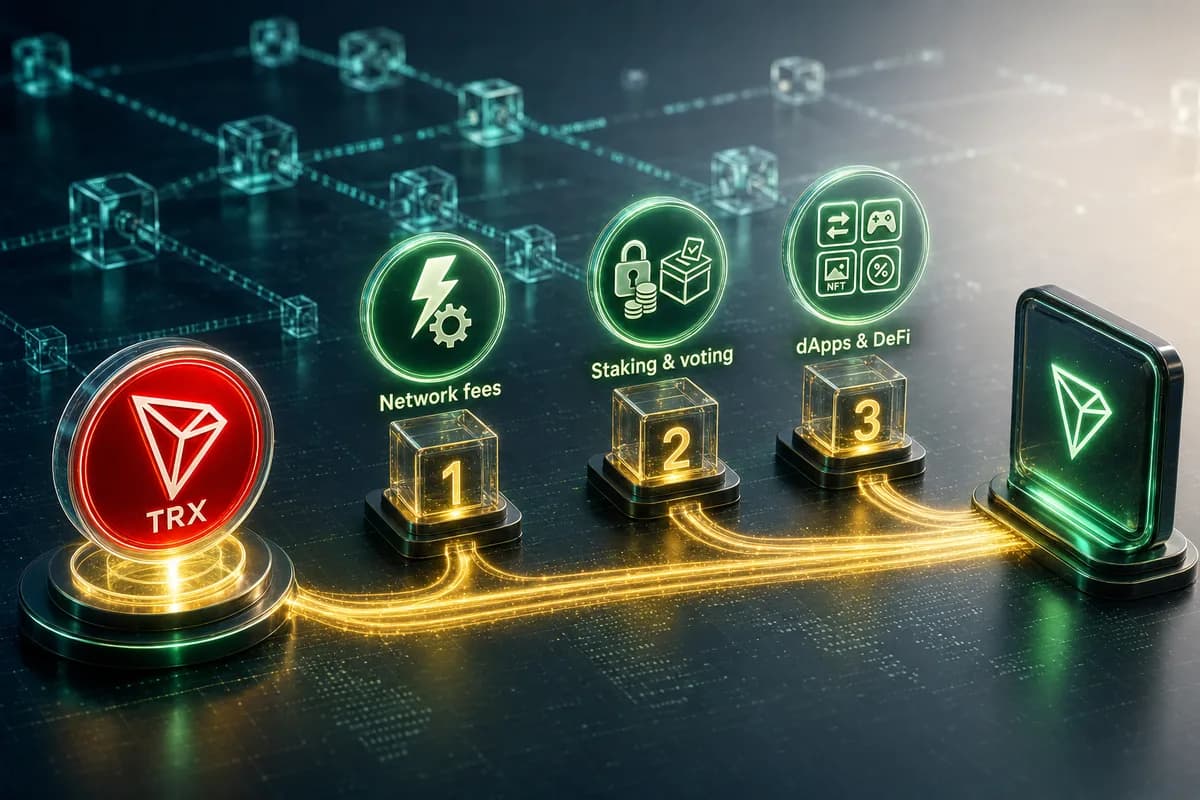
Although Tron is most often discussed in the context of transfers, the TRX token itself has broader uses. It is used by ordinary users, developers, validators, and large financial players, each with their own scenario. Below are the three main areas.
Paying Fees and Staking
The main practical function of TRX is paying for the network’s operation. When a user sends a token, interacts with a smart contract, or transfers the USDT stablecoin, they consume Bandwidth and Energy resources. These come either from staking or are covered by burning a certain amount of TRX. In other words, any activity on the network is in one way or another tied to the need for this token.
Staking on Tron plays a dual role. On one hand, it provides access to resources and lets users save on frequent operations. On the other, it opens up the right to vote for validators and take part in the life of the network. Frozen coins can be returned after a certain waiting period, so it is worth remembering that the liquidity of staked funds is temporarily limited.
For those who hold coins for a long time, it is a way to make the asset useful rather than just leaving it on a balance. Institutional interest is also growing: Anchorage Digital has expanded its support for Tron by introducing institutional TRX staking. This means that large market participants also see staking as a separate investment opportunity.
Voting and Network Governance
Every TRX holder who stakes coins receives voting rights. These votes are distributed among candidates for Super Representatives, and they determine who joins the active set and receives block rewards. In effect, users decide every day whom to entrust with confirming transactions.
In addition, changes to network parameters go through separate proposals approved by validators. We mentioned Proposal 108 earlier, but there have been quite a few such decisions: they concern fees, the resource model, and new smart contract capabilities. Each goes through discussion and a vote, and only then is the parameter switched on on the main network. So TRX is not only a means of payment but also an instrument of influence over the blockchain’s development, although with the caveat that the weight of a vote depends on the amount of coins staked.
The dApp and DeFi Ecosystem on Tron
A notable ecosystem of decentralized applications has formed around the network: decentralized exchanges, lending platforms, gaming and NFT projects, wallets, and developer tools. It also includes the USDD stablecoin, which, together with USDT, is part of the network’s total stablecoin supply.
The scale is visible in analytical reports. According to CoinDesk, in the third quarter of 2026 the total value of assets locked in the network’s protocols (TVL) grew by 27% to $5.7 billion. The number of accounts is also growing: after the end of the second quarter, their total exceeded 400 million, according to TRON DAO updates and Token Terminal data. At the same time, it is worth remembering that these figures reflect addresses, not individual people, since one person can own several wallets.
These indicators show that Tron has long since moved beyond a narrow circle of enthusiasts and become a mass platform. Still, its main strength remains how easy it is to make transfers and exchange assets within the ecosystem, and that is the subject of the following sections.
Stablecoins and Transfers: Tron’s Strong Suit
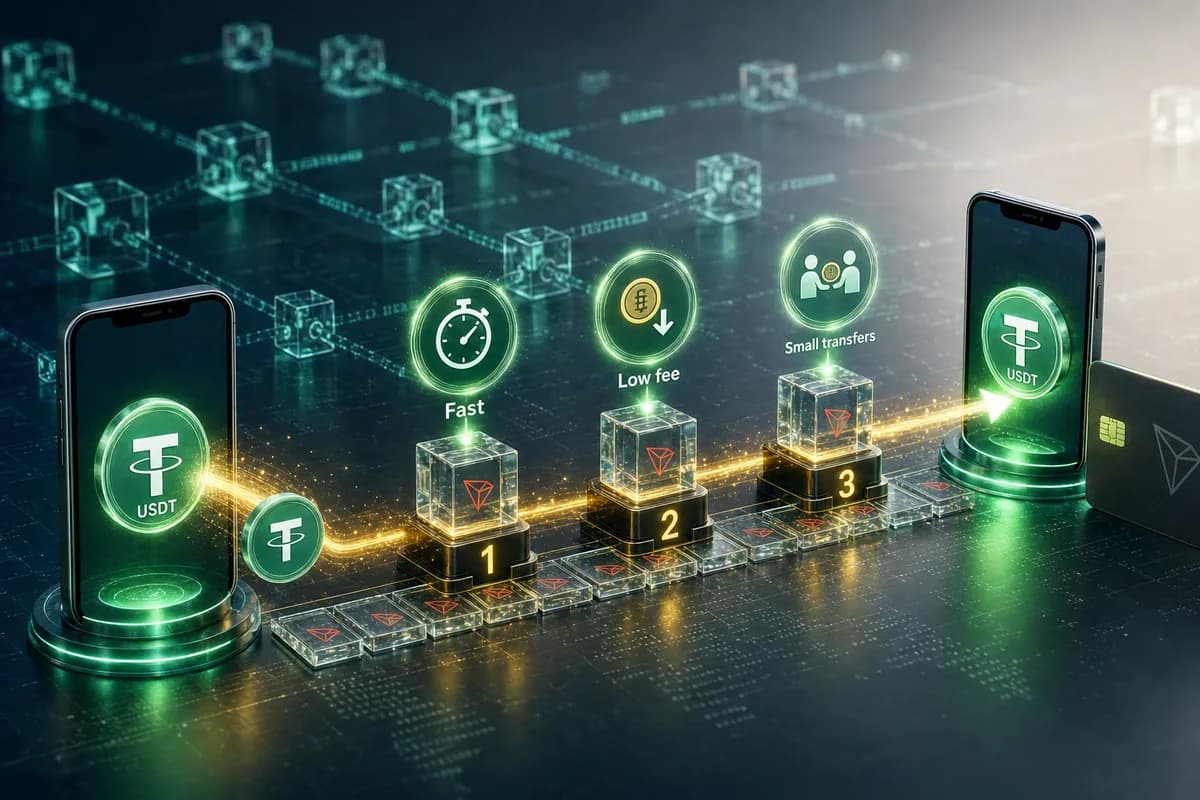
If you ask an experienced user what they associate with Tron, they will most likely name stablecoin transfers rather than the TRX token. The network has become practically the standard for this: it is fast, inexpensive, and understandable even to those who do not dig into technical details. For Ukraine this is especially relevant, since it is through Tron that many people receive, send, and exchange USDT.
Why Tron Is Chosen for Fast, Cheap Transfers
There are several reasons, and they work together. A block appears on the network roughly every three seconds, so there is no long wait for confirmation. The Energy and Bandwidth resource model makes the cost of an operation predictable. And the TRC-20 standard is supported by almost all popular wallets, exchanges, and exchange services, so the sender rarely runs into incompatibility.
A comparison with Ethereum suggests itself. The Ethereum network, with its ERC-20 standard, has a powerful ecosystem, but transfer fees there depend on congestion and can sometimes become noticeable for small amounts. For everyday and small transfers, Tron is usually more convenient. So the choice between TRC-20 and ERC-20 for USDT often comes down to a simple question: do you specifically need the Ethereum ecosystem, or is it more important to move funds quickly and cheaply?
The numbers bear this out. In the third quarter of 2026, Tron overtook Ethereum in average USDT supply. According to Token Terminal, Tron accounts for 49.49% of all USDT across the 12 networks tracked in the report. In other words, almost half of all USDT is held right here.
Record Network Metrics in 2026
Analysts describe the third quarter of 2026 as a record one. Average stablecoin supply reached $92.25 billion, up 4.18% from the previous quarter and 14.58% from a year earlier. Almost all of it is USDT: roughly 98% of the stablecoins on the network are issued as USDT.
The scale of transfers is striking. By Token Terminal’s count, quarterly stablecoin transfer volume came to $2.18 trillion. TRON DAO’s own report gives a slightly different figure, $2.21 trillion, and the discrepancy is explained by different counting methodologies. For an everyday sense of scale, something else matters more: daily USDT transfers on the network averaged about $24 billion.
User activity is also growing. On average over the quarter there were 76.53 million addresses holding stablecoins, and the number of transactions reached 1.08 billion, up 31.19% from a year earlier. In addition, according to CoinDesk, Tron handled about 73% of the global volume of stablecoin transfers. Keep in mind that addresses are not the same as people, and that some of the reports are published or distributed by TRON DAO itself, so the figures are best checked against primary sources.
Payment Cards and Retail Use
A separate trend concerns ordinary consumers. The share of USDT transfers under $1,000 on Tron rose from 52% in the second quarter to 55% in the third. This means the network is used not only by large players for big settlements but also by people sending small amounts to relatives, paying for services, or withdrawing earnings.
This also includes payment cards linked to cryptocurrencies. The volume of crypto card payments grew from $1.44 billion in the second quarter to $2.32 billion in the third, an increase of 60.5%. For the user, this is convenient: money held in stablecoins can be spent almost like ordinary money and, if needed, withdrawn into hryvnia.
Tron in 2026: Key Events and Updates
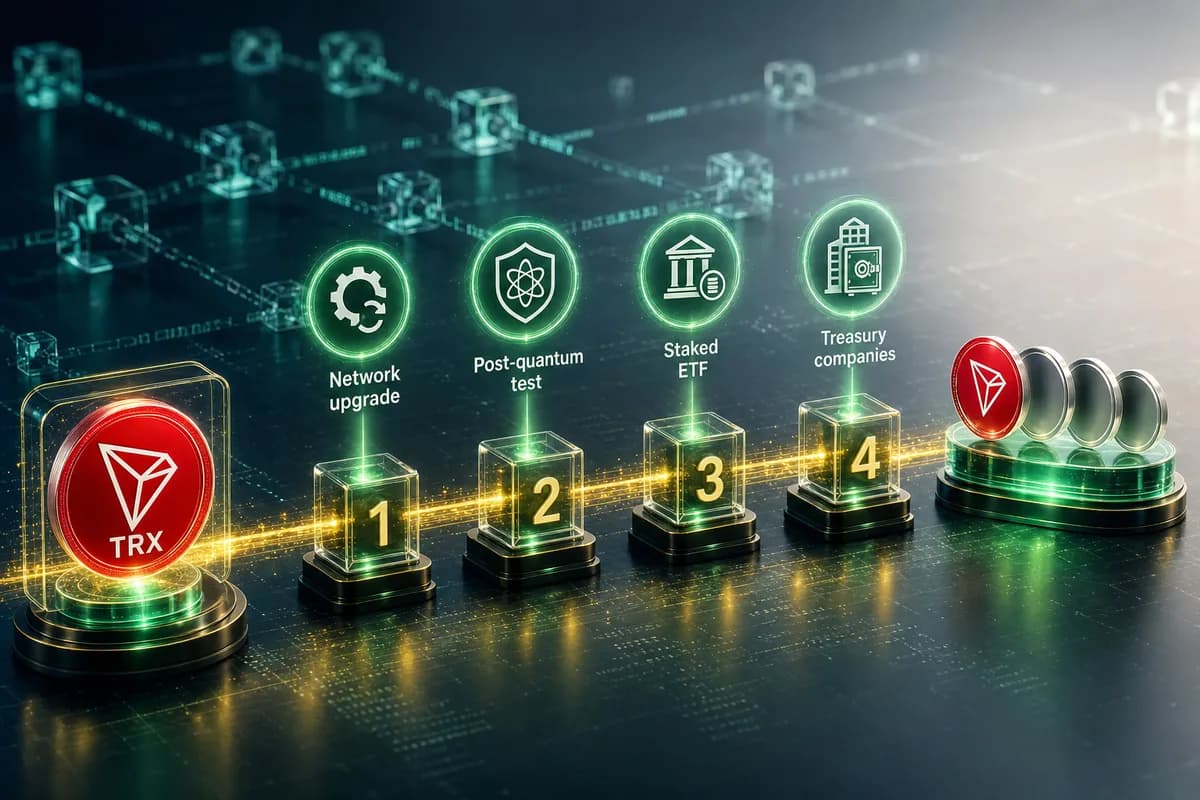
The year has been eventful for Tron, from technical updates to the token’s arrival on a U.S. exchange as part of a fund. Below is what you should know to understand the network’s current state.
Network Updates
Tron’s developers update the software regularly, and not all changes are visible to the end user. This summer, for example, the GreatVoyage-v4.8.2 update, named Pyrrho, was released as mandatory for all node operators, with a deployment deadline of August 16, 2026. In the fall, the network adopted the previously mentioned Proposal 108 on optimizing data storage in smart contracts.
There is also a look ahead. Justin Sun said that Tron’s post-quantum cryptography has gone live on a test network. This is still an experiment, but it shows that the team is preparing for threats that may emerge as quantum computing develops.
Institutional Interest: A TRX ETF, Institutional Staking, and Treasury Companies
The most notable event of the year for the TRX market: on September 9, 2026, the Canary Staked TRX ETF began trading on Cboe under the ticker TRXS, the first U.S. ETF with staked exposure to TRX. A product like this gives investors access to the token through an ordinary brokerage account, without handling wallets. In addition, Anchorage Digital has expanded its support for Tron by introducing institutional TRX staking.
Treasury companies that accumulate TRX on their balance sheets have also appeared. Tron Inc. posted a net profit of $14.9 million for the third quarter of 2026 and, as of November 10, held 723 million TRX worth about $229.3 million. Such activity indicates that the token is treated not only as a tool for transfers but also as an asset for long-term holding.
Tron’s Place Among Competitors
The competitive picture for Tron is complex. With Ethereum (ETH), the situation is twofold: Ethereum remains the main platform for DeFi and smart contracts, but Tron has pulled ahead in USDT volume, as we saw above. Against Solana, the network is compared on speed and low transaction costs: both are geared toward mass use, but they have different ecosystems and audiences. A useful figure for comparing revenue: Tron generated about 93% of the revenue among the L1 and L2 networks covered by the Token Terminal report.
The wider comparison set includes TON and XRP. The TON network is tied to Telegram, and its token was officially renamed from Toncoin to Gram, with the ticker GRAM, on June 15, 2026, while the blockchain itself kept the name The Open Network. XRP, for its part, is oriented toward fast international settlements and overlaps with Tron in purpose in that segment, although the networks differ technologically. Each of these coins tackles similar tasks in its own way, so the choice depends on what exactly the user needs: a transfer, an exchange, or participation in an ecosystem.
The TRX Exchange Rate and the Factors That Affect It
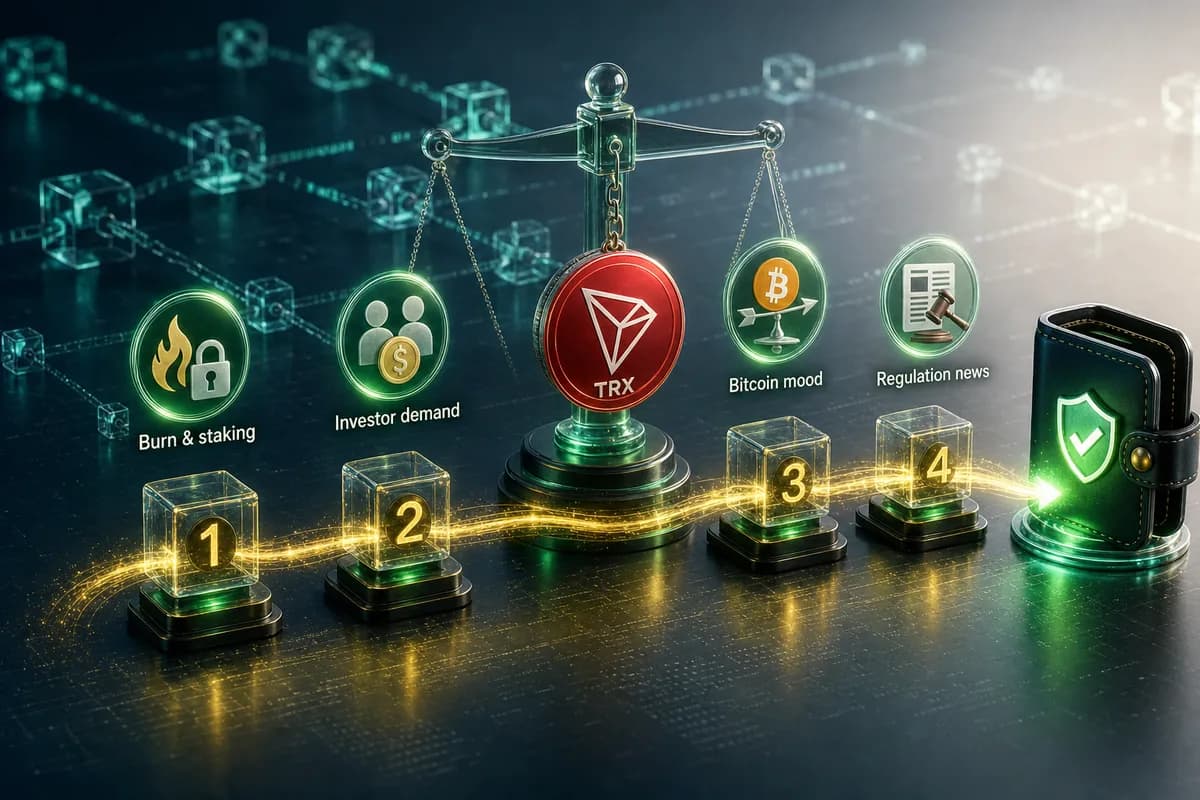
The TRX rate can be compared to the behavior of many other major cryptocurrencies, but it has its own particularities. In sorting them out, it helps to separate network metrics from the token’s price.
Through the first half of November 2026, the TRX rate held roughly within $0.31 to $0.33. On November 3, for example, TRX traded near $0.32 with a market capitalization of about $30.4 billion. For context, the all-time high is $0.4313. Be sure to check the current rate on exchange pages on the day of publication, since the price changes daily.
Why Network Activity Does Not Always Show Up in the Token’s Price
It may seem strange, but record transfer volumes do not mean automatic growth in TRX. Analysts write about this too: Tron’s dominance in USDT reflects the usefulness of a low-fee network rather than necessarily a stronger accumulation of value in TRX itself. The explanation is simple: users transfer stablecoins rather than buying TRX in large amounts. The token’s value depends on how much of it is consumed on fees, staking, and burning, as well as on demand from investors.
TRX and the Market as a Whole
Like most altcoins, TRX is sensitive to bitcoin’s (BTC) movements: when BTC falls or rises sharply, large altcoins usually move in the same direction, albeit with different amplitude. The influence of ETH and overall risk sentiment adds to this. So for assessing the situation, it is useful to look not only at the TRX chart but also at the dynamics of the main coins, trading volumes, and regulatory news.
Advantages of Tron: Speed, Low Fees, Liquidity
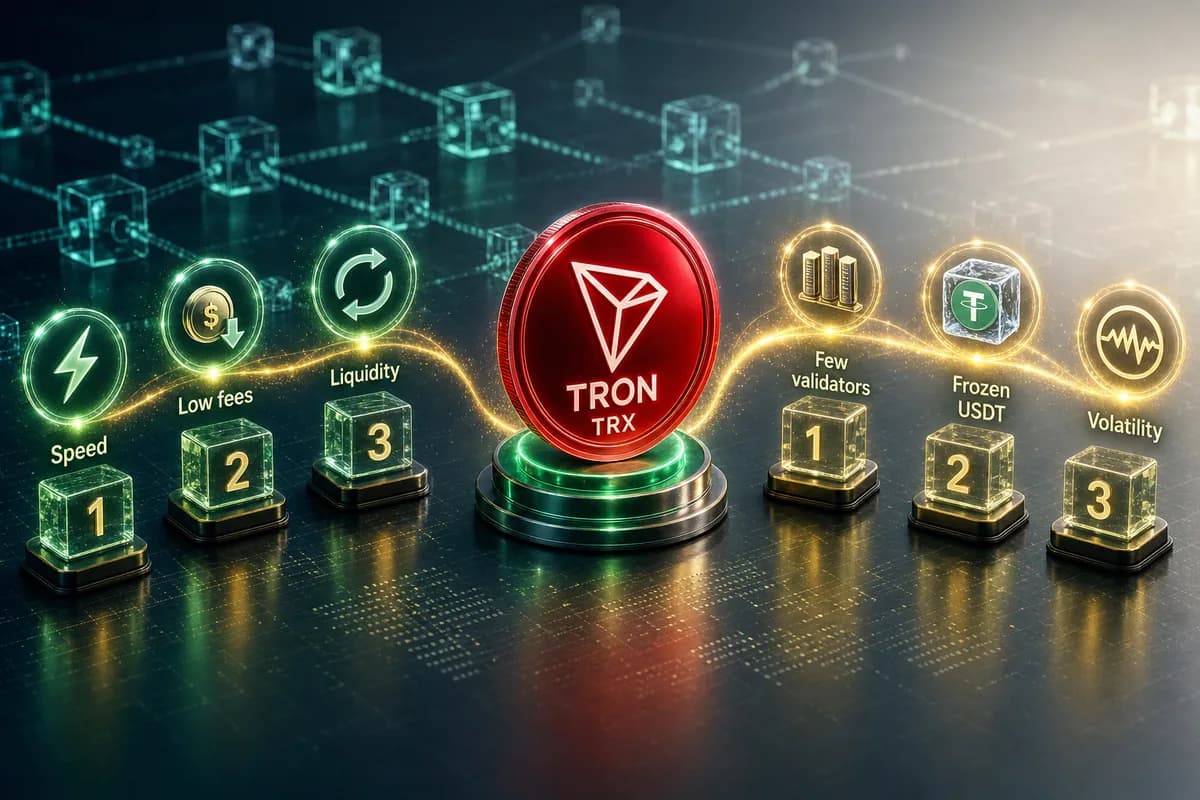
The network’s strengths include fast block confirmation, low cost for small transfers, and broad support from wallets and services. Thanks to the mass use of USDT TRC-20, almost every wallet, exchange, and exchange service accepts such a transfer, which makes it much easier to work with than less widespread networks. Add a well-established infrastructure of exchange services and exchanges, and it becomes clear why Tron is so popular in Ukraine.
Risks of Tron: Centralization, Regulation, Reputation
There are risks too, and it is important to speak honestly about them. First, a structure with 27 active validators means a higher degree of centralization than on large networks. Second, there is heavy dependence on USDT: the issuer can block addresses. An example: Tether reported that its T3 Crime Unit froze $450 million in suspected illicit crypto assets. For an ordinary user, this means that funds are best received from trusted sources. Third, there are reputational and regulatory questions around the founder, discussed above. Finally, like any cryptocurrency, TRX remains a volatile asset, and its rate can change significantly.
How to Buy and Exchange TRX in Ukraine
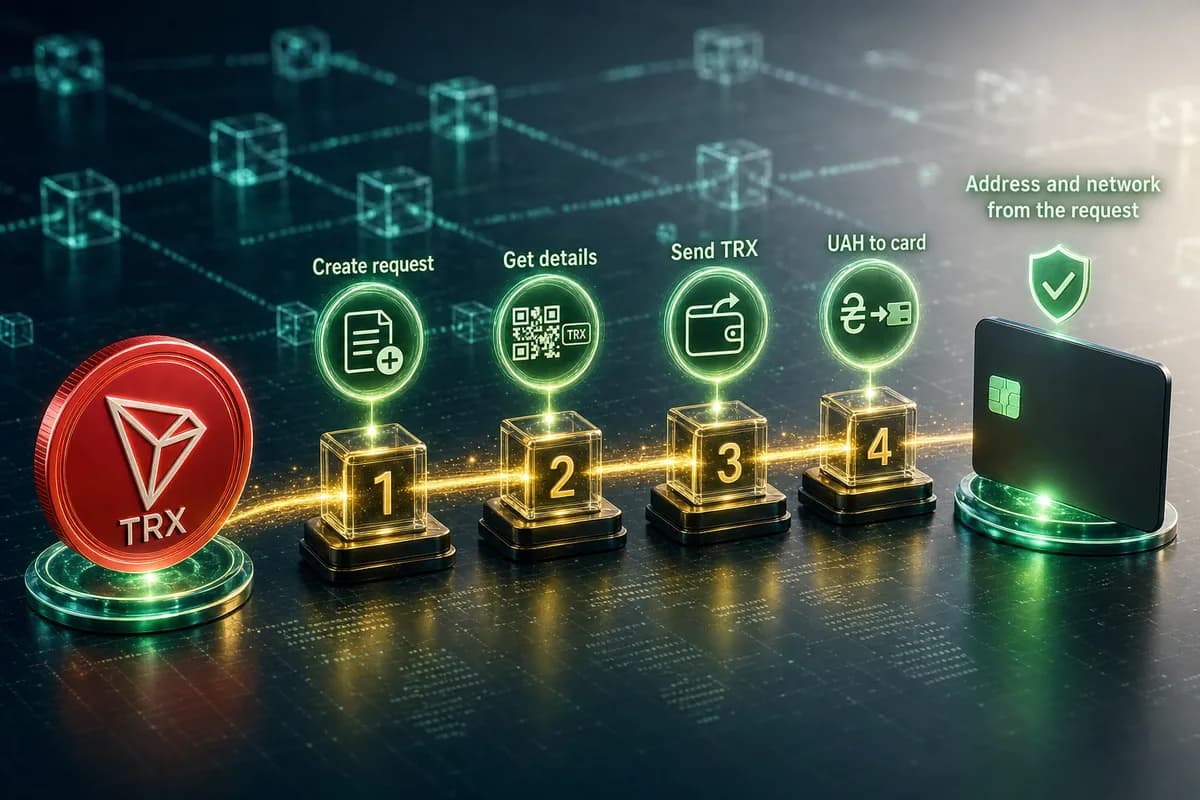
You can buy TRX on an exchange or through an exchange service. An exchange suits those willing to go through verification and trade against an order book. An exchange service such as Coinmoneyhub is simpler: you choose a direction, see the amount you will receive right away, and create an order, without working with an order book. On Coinmoneyhub you can get TRX in exchange for USDT, BTC, ETH, and other coins, and sell TRX for hryvnia paid out to a card or for another cryptocurrency. Hryvnia cannot be exchanged for TRX directly, but you can buy USDT for hryvnia with a separate order and then exchange it for TRX. The rate and the service fee are shown upfront, with no hidden fees or floating rates.
Exchanging TRX for Hryvnia via Coinmoneyhub: 4 Steps
Exchanging TRX for hryvnia is automatic, with no operator involved, and the rate and the amount you will receive are shown before you send the coins.
How to exchange TRX for hryvnia: 4 steps
- Create an order: choose the TRX → hryvnia direction and enter the amount and your card.
- Get the payment details: the address to pay to on the Tron (TRX) network.
- Send TRX to the address from the order.
- Receive hryvnia on your card.
If you send less than the order amount, the payout is automatically recalculated based on the amount actually received. Before sending, check the amount and the address, because crypto transactions are irreversible. If you hold USDT, you can sell it for hryvnia the same way, with the payout to your card.
Withdrawal to a Card: Monobank, PrivatBank, and Other Banks
You can receive hryvnia on a card of any Ukrainian bank, including Monobank, PrivatBank, PUMB, and Oschadbank. Crediting time depends on the load on the service and the bank, so for a specific order, rely on the information on the exchange service’s website. To keep your bank from questioning the incoming payments, receive hryvnia on your own card, do not split the amount into many small transfers, and spread operations out over time. This is covered in more detail in a separate article – Card blocked for crypto transactions.
Security: Address and Network from the Order, AML Check
The most common mistakes come from inattention. TRX itself is sent on the Tron (TRX) network, while the TRC-20 label refers to tokens on that network, such as USDT. Coins sent over the wrong network are lost, and the service cannot return them, so take the address and the network only from the order, copy the address in full, and compare its beginning and end. Beware of address-substitution scams, in which a similar-looking address sent by a fraudster appears in your wallet history. Typical mistakes are covered in more detail in a separate article – How to avoid losing cryptocurrency when transferring.
No identity verification is required to exchange TRX to a card. Incoming coins automatically go through an AML check: the service verifies that they are not linked to suspicious addresses. How it works is explained in a separate article – AML verification for cryptocurrency exchange.
If you need to exchange more than just TRX, the service handles USDT, BTC, ETH, LTC, XRP, and other coins: such a set of directions is convenient for those who hold several assets.
How to Store TRX: Hot and Cold Wallets
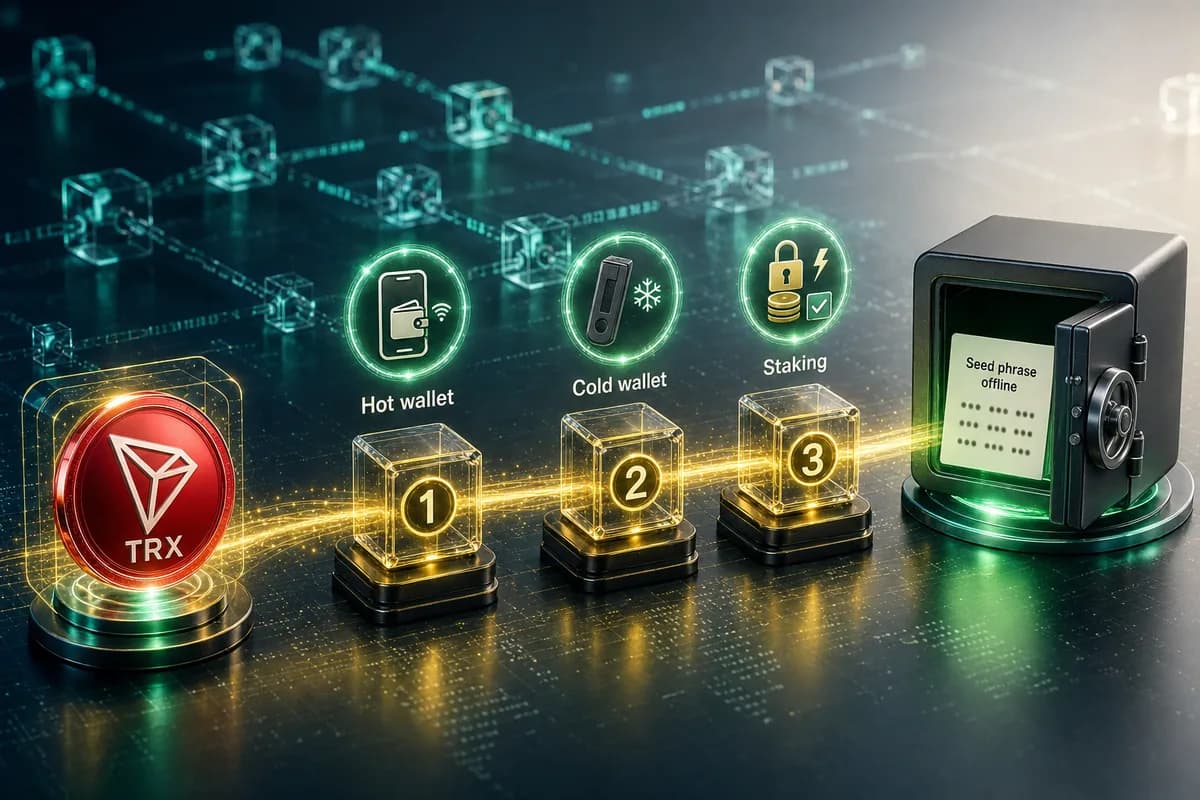
Hot wallets are connected to the internet: these are mobile apps and browser extensions. Among the best known is TronLink, and in late 2025 its extension received an update to version 4.6.0 with a focus on security and performance. Such wallets are convenient for frequent operations but more vulnerable to fraud and viruses.
Cold storage, in particular hardware wallets, does not touch the network, so it suits long-term holding of significant amounts. The main rule for any type: never give your seed phrase to anyone, keep it offline, and do not photograph it.
Staking as a Way to Earn Income
Staking lets you not only store TRX but also put it to use: frozen coins provide resources for transactions and the right to vote. The owner can keep those resources for themselves or delegate them to others. The list of available options and requirements is best checked in official wallets. Income is not guaranteed, and unfreezing takes time, so stake only an amount you will not need in the near term. For those who prefer traditional instruments, there is an alternative: the ETF with built-in staking mentioned above.
Tron Today: What to Remember
In nine years, Tron has gone from an ambitious idea about decentralized content to one of the world’s main payment networks. Speed, low fees, and broad support make it a convenient choice for transfers, especially in combination with stablecoins. At the same time, it is worth assessing the risks soberly: centralization, dependence on USDT, and the volatility of TRX itself.
If you need to turn TRX into hryvnia quickly, Coinmoneyhub offers exchange of TRX to a card of any Ukrainian bank, as well as to USDT, BTC, ETH, and other coins. Check the rate, the network, and the address from the order before sending, and the operation will go smoothly, without unpleasant surprises.
